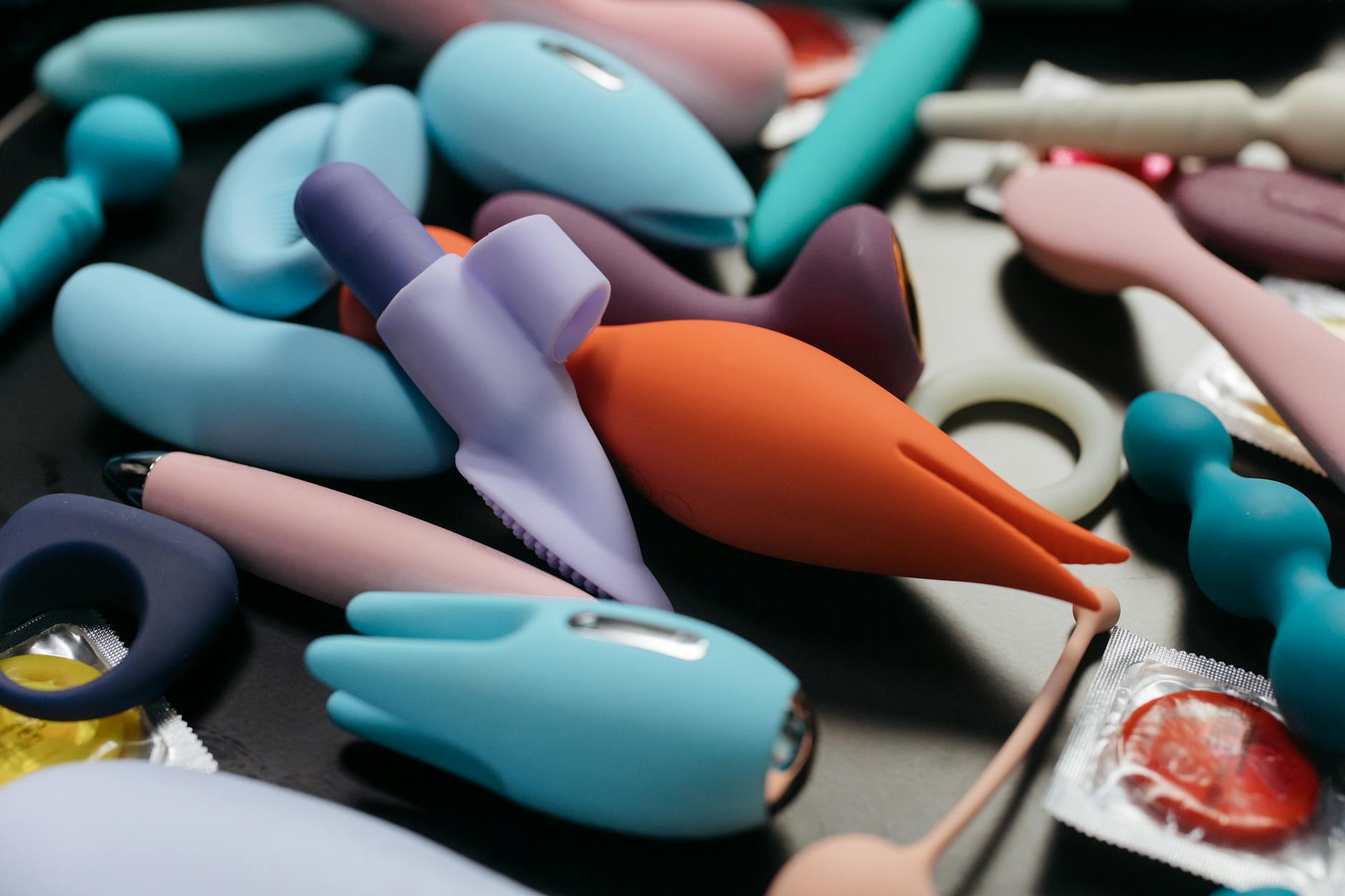
Let's be real about pleasure after a breakup
When a relationship ends, most people talk about the grief, the logistics, the therapy. Nobody talks about the fact that you might not know what gets you off anymore. Or maybe you do know, but it feels weird to access on your own. Or you're scared that enjoying solo pleasure means you've given up on partnership. Here's the thing: rediscovering your body after a breakup is not a consolation prize. It's often the most important sexual education you'll ever get.
I've worked with hundreds of people navigating single life after serious partnerships, and the pattern is always the same. They've spent years calibrating their pleasure around someone else's pace, someone else's preferences, someone else's timeline. They've learned to read a partner's rhythm instead of their own. And then suddenly, they're alone with their own nervous system, and they don't know how to listen.
Photo by cottonbro studio on Pexels
Why solo pleasure is not a substitute, it's a baseline
Here's what I want you to understand first: exploring your own body with a lemon clitoral vibrator isn't about replacing partnership or proving you're fine on your own. It's about building a foundation. When you know what your body needs, what patterns of touch make you actually orgasm (not just politely respond), what builds your arousal—you bring that knowledge into your next relationship. You become someone who can ask for what they want instead of guessing.
Single pleasure rewires you from being responsive to being generative. You're not reacting to someone else's touch. You're initiating. You're exploring. You're calling the shots. That's a completely different neural pathway, and it takes practice to build.
Most people come out of long partnerships and jump straight into dating or new relationships because being alone feels unbearable. I'm not saying don't do that. I'm saying that taking six months or a year to actually understand your own pleasure chemistry isn't self-indulgent. It's preparation.
The lemon vibrator advantage for solo exploration
Why am I specifically talking about lemon vibrators and clitoral vibrators instead of, say, internal vibrators or wand toys? Because when you're rediscovering pleasure, you want simplicity and intensity that you can control completely. The suction-based design of a lemon clitoral vibrator means you're not relying on your own hand coordination. The sensation is consistent, calibrated, and you can build patterns with it.
There's also a psychological component. The lemon sucker is toy-shaped, which means less cognitive load about what it "means" to be using it. It's not a dildo (which some people associate with partnered sex), not a wand (which has its own cultural baggage), not a rabbit (same). It's a specific design that does one job very well. For someone rebuilding their relationship with their own body, that focus is freeing.
Start with the lowest intensity settings. Most people coming out of partnered sex assume they need intensity because their partner's natural variation has disappeared. But your nervous system needs time to remember what slow feels like. Begin with pattern 1 or 2 on the lemon clitoral vibrator. You'll probably want to turn it up after three sessions. That's information about your actual preference, not about what you're supposed to like.
Building a solo pleasure ritual that actually sticks
Here's where most people fail. They think they can just grab the toy, spend five minutes, and move on. That works fine if you're already comfortable with your arousal. If you're rediscovering it? You need ritual.
I'm not talking about candles and rose petals. I'm talking about a repeatable structure that trains your brain that this time is for you. Here's what works:
Set aside 30 to 45 minutes. Not five minutes while your partner is showering. Not 10 minutes before bed when you're exhausted. An actual block of time where you're not multitasking, not half-watching your phone, not listening for the front door.
Start with touch that has nothing to do with your genitals. Hands on your chest, your thighs, your stomach. This is not foreplay in the traditional sense. This is you learning where your body is responsive. Most people discovering solo pleasure realize their partner never touched their hipbones, or their inner arm, or the back of their neck in ways that actually worked. You're collecting data.
Then move to the lemon sucker. Start at the lowest setting. Use it in patterns, not just holding it in one place. Many people instinctively go for constant direct pressure, but your clitoris responds better to rhythmic stimulation. Pulse, release, pulse. Let your body build arousal gradually instead of chasing intensity.
The psychological shift happens when you realize: I can take exactly as long as I want. There's no one waiting. There's no timeline. There's no performance. That freedom alone often changes how orgasms feel.
When solo pleasure triggers grief or disconnection
I want to name something that almost nobody expects: using a lemon vibrator alone after a breakup sometimes makes you sad. You're touching your body. You're building arousal. And then you feel the absence of partnership, or you remember what used to happen, and the pleasure gets tangled with loss.
This is normal. It doesn't mean you're doing it wrong. It means you're grieving. Keep using the vibrator anyway. The grief and the pleasure can coexist. Over weeks and months, the pleasure starts winning more space. But you don't have to pretend the sadness isn't there.
If you're months out from a breakup and every solo pleasure session becomes a breakdown, talk to someone. A therapist, a trusted friend, a coach. That might mean you need to wait a bit longer before reintroducing toys. That's also fine.
Troubleshooting solo pleasure with clitoral vibrators
Some people come out of relationships and find that nothing feels good. Everything is either too much or completely numb. This usually means your nervous system is still in protective mode. Your body's not convinced it's actually safe to relax and feel pleasure.
Don't fight this. Use lower intensity. Use it for shorter sessions. Sometimes just holding the lemon vibrator against your skin without turning it on helps your nervous system get used to the sensation. Orgasm is not the goal when you're in this phase. Comfort is.
Other people find that solo pleasure is always less intense than partnered sex. They think something's wrong with them. Nothing is. Partnered sex has the novelty, the responsiveness, the psychological component of being wanted. Solo sex is different. It's not worse, just different. Your body might learn to prefer one or the other. Both are worth exploring.
How solo pleasure changes what you want in a partner
This is the unexpected part. When you've spent 30 or 40 sessions with your lemon clitoral vibrator, when you know exactly what pattern makes your nervous system light up, when you've had multiple types of orgasms and understand your own variability—you're no longer desperate for a partner to complete you sexually.
You become someone who wants partnership because it's genuinely better, not because you're incomplete alone. You can actually tell a partner what you like. You can ask for specific patterns of touch. You know that you can come, repeatedly, which means you're not anxious about whether your partner is "doing it right."
This is magnetic energy. People sense it. You're someone who has agency over your own pleasure, and that changes everything about how you move through the world.
FAQ: Solo pleasure and lemon vibrators
How often should I use a lemon vibrator when I'm rediscovering pleasure?
Start with 1 to 2 times per week. This gives your nervous system time to build new associations without becoming routine. If you're feeling good after a month, you can increase frequency. There's no magic number. Some people use it daily, others weekly. The goal is that it feels good, not obligatory.
Is it normal that my orgasms alone feel different than with a partner?
Completely normal. Solo orgasms are often more focused, sometimes less intense, sometimes more intense. Partnered orgasms have emotional and novelty components. They're not better or worse, just different. Both are worth understanding.
How do I know if I'm using the lemon clitoral vibrator "wrong"?
You're not. There's no wrong way to use a toy. If a pattern feels terrible, stop. If intensity is too much, use a lower setting. If you're not coming, try a different pattern or take a break and try tomorrow. Your body will tell you what works.
Will using a lemon sucker make it harder to come with a future partner?
No. Your body's not a machine that gets "broken" by one type of stimulation. Using a vibrator actually helps many people learn their arousal patterns, which makes partnered sex easier, not harder. You become someone who can communicate what works.
Should I tell a new partner that I've been exploring solo pleasure with a toy?
That's your call. If you eventually want partnered toy use, yes, bring it up. If you're just building your own baseline and it feels private, you don't owe anyone that information. But if you're someone who wants vibration during partnered sex, it's worth mentioning earlier rather than later so a new partner isn't surprised.
How long before I should expect solo pleasure to feel normal?
About 4 to 6 weeks of regular use. Your nervous system takes that long to stop treating self-touch as unusual or selfish and start treating it as a normal part of your life. Some people feel the shift in two weeks. Others take three months. Be patient with yourself.
The real work: staying curious
Rediscovering pleasure alone isn't about reaching some destination where you finally know exactly what you like. It's about building a practice of curiosity about your own body. One session it might be intensity. Another it might be slowness. Sometimes you come easily. Sometimes it takes forever. That variability is information, not failure.
When you move through this phase with genuine interest instead of performance pressure, something shifts. You start to trust your body again. You start to know yourself. And that foundation—that knowledge that you can access your own pleasure independent of anyone else—that's what changes your relationships forever.