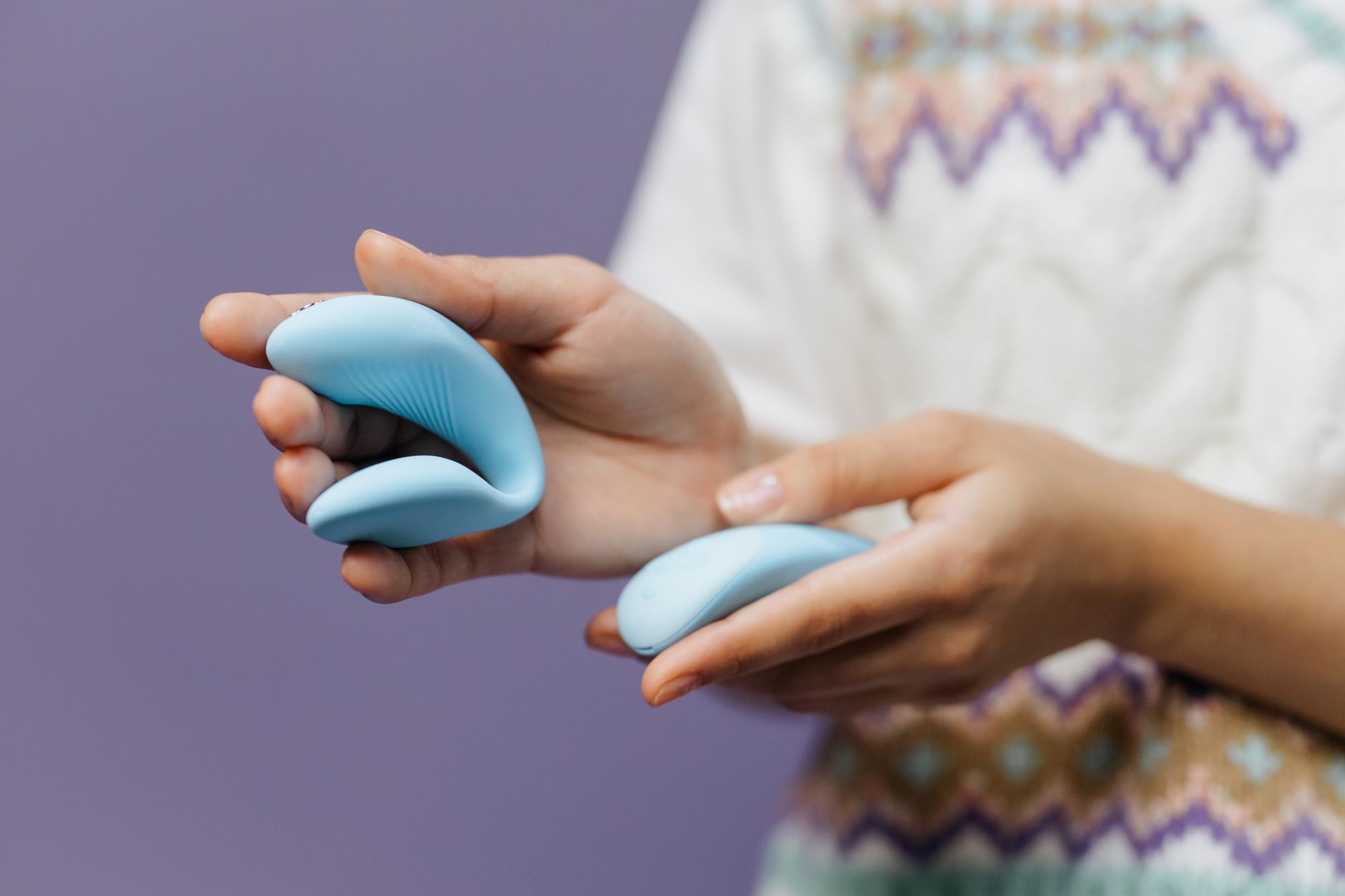
The thing nobody tells you about toys and intimacy
Here's the honest part: most of my couples clients avoid toys because they think it means the relationship is failing. One person needs "extra help." The other person feels replaced. Someone's not enough. So they stay stuck, both frustrated, both silently wondering if this is just how it's supposed to feel.
That's backward. A lemon vibrator isn't a Band-Aid on broken intimacy. It's actually one of the fastest ways to rebuild connection when performance pressure is crushing both of you.
What performance pressure does to couples
In heterosexual relationships especially, there's this ancient script that runs in the background: the person with the penis should be able to bring the person with the vulva to orgasm through penetration alone. Full stop. Anything else means someone failed.
It's a terrible script. It's also completely inaccurate. Around 65 to 70 percent of people with vulvas need clitoral stimulation to orgasm, and adding a partner into the equation makes it even less likely to happen on its own timeline. But that script doesn't care about statistics. It runs anyway, quietly tanking both people's pleasure.
What happens next is predictable. The person with the vulva feels pressure to orgasm faster or perform arousal they don't feel. They fake it or go numb. The person penetrating feels like they're failing. Both people stop enjoying sex because both are trapped in a performance anxious loop.
That's where a lemon clitoral vibrator changes everything.
Why introducing a toy actually repairs emotional connection
When you bring a lemon vibrator into partnered sex, you're doing something radical: you're admitting the script was wrong. You're saying "what we've been taught to want isn't what either of us actually needs." That admission, done together, is powerful.
Here's what shifts:
First, the pressure evaporates. Suddenly the person with the vulva isn't waiting for an orgasm that might not come. They're getting the stimulation their body actually responds to. They're not performing. They're present.
Second, the person penetrating stops feeling like the solo architect of pleasure. They're no longer carrying the entire weight of the experience on their shoulders. There's actual relief in that. I see it in clients' faces when they describe this for the first time.
Third, and this matters most: you're building trust together. You're saying "I want you to feel good more than I need to pretend we fit some outdated model." That's intimacy.
How to introduce it without triggering defensiveness
Timing is everything. The worst moment to bring this up is during sex when someone's already feeling vulnerable. The best moment is when you're both clothed, fed, relaxed, and you actually have time to talk.
Start with curiosity, not criticism. "Hey, I read that a lot of couples find lemon vibrators make things way better. I'm curious if we'd ever want to try that together" works. "You clearly need extra help getting there" does not.
Frame it as something for both of you. Because it is. A lemon sucker changes the entire dynamic of partnered sex, not just one person's experience. When you can actually relax and feel good, your partner gets to relax too. Everyone wins.
If your partner expresses hesitation, listen. Don't push. Many people carry shame around toys because of how they were raised or what they've been taught. That shame needs space to breathe, not pressure. Sometimes the conversation needs to happen over weeks, not minutes.
The first time using one together
Take the performance pressure off that first time too. Agree that you're just exploring. There's no goal of orgasm. You're not trying to prove anything. You're just seeing what feels good.
Start with external play only. Build arousal together the way you normally would. When things start heating up, introduce the lemon vibrator slowly. Let your partner guide where it goes and how intense. This is about them learning their own body with your presence, not about you operating a remote control.
Many couples find that the person with the vulva wants to hold it themselves first. That makes sense. They know their body better than anyone. Let that happen. Your job is to stay present, stay connected, keep touching them in other ways. The toy is one input in a whole experience.
Some people worry the vibrator will make direct touch feel boring after. It doesn't. What often happens is the opposite: because the pressure is gone, direct touch feels more alive. You're not performing anymore. You're actually feeling.
When lemon clitoral vibrators unlock new patterns
Here's something I see repeatedly: once couples remove the performance script, they often discover they actually enjoy completely different things than they thought. Maybe one partner has always wanted more foreplay but felt like they were being selfish asking for it. Maybe the other person secretly wanted to be penetrated less and touched more. The vibrator doesn't create those desires. It just makes it safe enough to admit them.
This is where the real intimacy happens. Not during the sex itself, but in the conversations after. "That felt so different when I wasn't worried." "I liked watching you enjoy that." "Can we do this again?" Those statements rebuild connection at a level that penetration alone never touches.
Common friction points and how to handle them
One partner wants it more often than the other. That's normal. Sex drive differences are one of the most common reasons couples come to therapy. A lemon vibrator doesn't fix mismatched libido, but it can make the conversations easier. "I want us to have sex twice a week and I know you want once. Can we compromise with the vibrator in the middle?"
One partner worries it's "not real sex." Worth clarifying: if it involves both of you, if you're both present and turned on and connecting, it's real. Sex is not a single narrowly defined act. It's everything you do to share pleasure together.
One partner feels left out or secondary. This one needs direct conversation. "I want you to feel like you matter in this." Then actually show it. Hold your partner while they use it. Stay engaged. Talk to them. Toys are tools for connection, not replacement partners.
The deeper shift that happens over time
In my experience, couples who bring lemon clitoral vibrators into their sex life don't usually come back saying "the toys are amazing." They say something different: "We actually talk about what we want now." Or "I feel like my partner sees me." Or "Sex doesn't feel like an obligation anymore."
That's the real work. The vibrator is just permission to do it.
When you remove the performance script and the shame around pleasure, you create space for actual desire to emerge. You get to discover what you both actually want instead of what you've been taught you should want. That changes everything.about your connection, not just about sex.
Start small. Stay curious. Keep talking. That's how a tool becomes a gateway to something deeper.
People also ask
Will using a lemon vibrator make my partner feel inadequate?
Not if you approach it as a team project rather than a fix for a problem. The shift happens when you both understand that a lemon clitoral vibrator removes pressure for both of you. It's not about his performance or her responsiveness. It's about removing an impossible expectation that was crushing you both. When couples frame it that way, most partners feel relief, not threatened.
How do I bring this up without making it seem like something's wrong?
Frame it as something for the relationship, not for one person. "I want us to have more fun together" or "I read that this helps couples relax more" works better than "I need this to orgasm." Timing matters too. Choose a moment when you're both relaxed and clothed. Written communication (a text or email) can also give your partner time to process before responding, which helps with defensiveness.
Should I use a lemon sucker during partnered penetration or only before?
Both work, depending on what feels good to you. Some couples use it during foreplay to get aroused, then switch to penetration alone if that's comfortable. Others use it throughout. Some use it only at the end when orgasm is close. There's no right way. This is something to experiment with together and adjust based on what actually feels good, not what you think should feel good.
What if my partner doesn't want penetration anymore once we introduce the vibrator?
That's actually valuable information about what your partner's body actually wants. Sometimes people think they like penetration because that's what they're supposed to like, but when they have permission to choose, they don't. That's not a failure. That's you learning about your partner more deeply. The conversation becomes "Okay, so what does feel good?" and you build from there.
How long does it take to feel more connected after introducing a toy?
Many couples report a shift after just one or two experiences where both people are actually present and there's no performance anxiety. The real deepening happens over weeks and months as you keep talking openly, keep trying things, and keep discovering each other. But the immediate relief of pressure often happens right away.
Can we use a lemon vibrator if I have anxiety about being vulnerable?
Yes, but go slower and communicate more. If vulnerability is hard for you, that's information you can share. "I want to try this but I might feel self-conscious. Can you help me feel safe?" Your partner can't read minds, but they can absolutely help create a container for vulnerability if you tell them it matters to you. That conversation itself is intimacy.