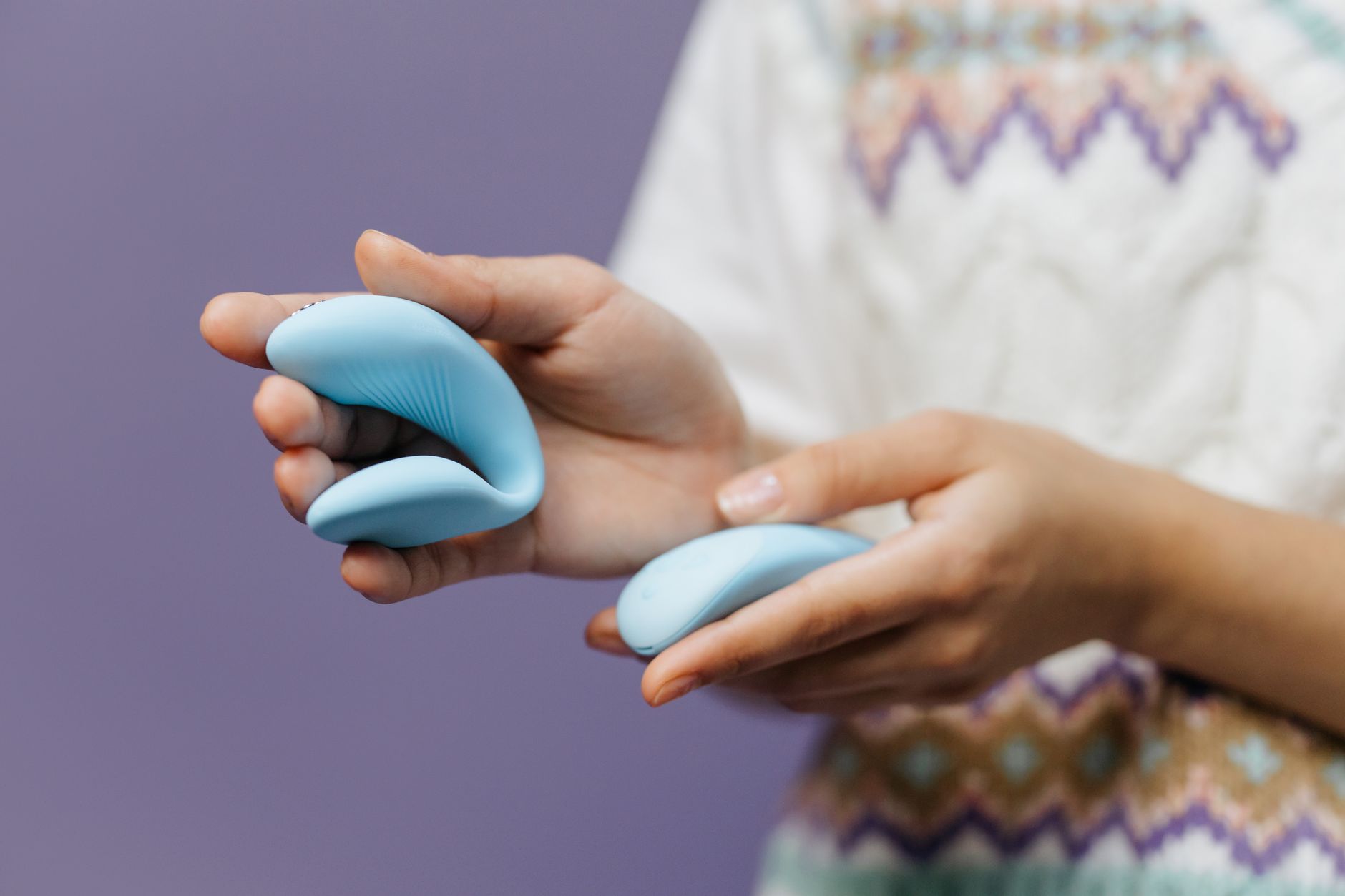
Here's the thing nobody tells you about your pleasure
Your body is not a machine with a standardized settings menu. Monday's perfect intensity might feel like too much on Wednesday. Friday's go-to rhythm might leave you flat on Saturday morning. This isn't a sign that something's wrong with you or that your toy isn't the right fit. It's just how bodies work.
I've spent years working with couples and individuals navigating this exact frustration, and it's one of the most common questions I hear: "Why do lemon vibrators work beautifully some days and feel kind of meh on others?" The answer isn't about the toy. It's about understanding what changes your response from day to day, and how to use tools like lemon clitoral vibrators strategically around those shifts.
What actually changes from day to day
Let's start with the obvious culprits. Your hormone levels fluctuate across your cycle (whether you menstruate or not). Estrogen, progesterone, and testosterone all peak and dip on different days, and each one influences blood flow to your genitals, your brain's sensitivity to stimulation, and how quickly arousal builds.
But hormones are just one variable. Here are the others that matter:
Sleep and fatigue. Six hours of sleep changes how your nervous system responds. Eight hours feels completely different.
Stress and cortisol. Even low-level stress (a tense work email, a parking ticket) suppresses arousal. High cortisol makes stimulation feel distant or numb.
Hydration and nutrition. Dehydration reduces blood flow. Low blood sugar changes your patience threshold.
Where you are in your monthly cycle. Not everyone menstruates, but everyone with a vulva experiences cyclical hormonal shifts. Your sensitivity literally peaks at different points.
Emotional state. Anxiety, grief, excitement, or disconnection from your partner all rewire how your nervous system responds to pleasure.
Medication timing. SSRIs, birth control, antihistamines, even timing of your coffee can shift sensation.
How much you've used lemon vibrators recently. Your nerve endings adapt to consistent stimulation, which is why you might need a different setting this week than last week.
None of these things mean your lemon vibrator is failing you. They mean your body is responding normally to real variables. The answer isn't a different toy. It's a smarter strategy.
Why lemon vibrators handle variability better than other toys
Let me be specific about what makes a lemon sucker or clitoral vibrator like this one different. Suction-based toys (as opposed to vibration-only) create a sealed sensation that works across a wider range of sensitivity levels. When your nerves are numb, suction still reaches deeper tissue. When you're hypersensitive, you can use a gentler pattern.
This matters because it means you're not chasing the same vibration intensity every single day. Instead, you're working with a toy that adapts to where you actually are.
Here's the practical version: on a day when you're well-rested, hydrated, and your cycle is in a high-sensitivity window, pattern 5 on a lemon vibrator might feel perfect. On a day when you're stressed, tired, and in a lower-sensitivity window, pattern 1 or 2 of the same toy gives you what you need without frustration.
You're not failing the toy. The toy is designed to work across multiple states of your body.
The consistency protocol: what to track
If you want to understand your own patterns, start tracking three things for two weeks:
1. Pattern preference. Which setting felt best? Write it down: "pattern 2, 3 min warm-up, 8 min total."
2. Pre-pleasure conditions. How much sleep? Coffee? Water? Stress level (rate 1-10)? Cycle day (if applicable)?
3. Response quality. Did you orgasm? How easily? Did intensity change mid-session? Was it satisfying or just functional?
After two weeks, you'll see correlations. You might notice that when you sleep fewer than 7 hours, you need patterns 3-5 instead of patterns 1-2. Or that high-stress days mean 15-minute sessions instead of 8. Or that specific days in your cycle respond better to slower patterns.
Once you see the pattern, you stop treating every session like a guessing game. You start anticipating what you need.
The practical weekly rhythm
Here's what I recommend for most people: treat your pleasure like an investment that shifts week to week.
High-sensitivity windows (usually around ovulation if you cycle, or just days when you feel generally relaxed and well-rested): Try faster patterns, shorter warm-up, experiment with intensity you normally skip.
Lower-sensitivity windows (post-ovulation if you cycle, or high-stress/low-sleep days): Lean on longer warm-up time, gentler patterns, and be willing to spend 15-20 minutes instead of 8.
Recovery days (when stress is acute or you're exhausted): Use it as foreplay extension, not the main event. Longer pattern 1-2, lots of lubrication, permission to stop early.
Exploration days (when you feel curious and have time): Use variability as an asset. Try a pattern you normally skip. Notice how it feels different than it did last month.
Lemon vibrators work best when you're working with your body's rhythm, not against it.
How to communicate this to a partner
If you're using lemon vibrators with a partner, they might interpret inconsistency as "they're not enjoying this like they did last time" or "something's wrong." That's a relationship problem hiding inside a pleasure problem.
Let them know: "My body changes week to week. Sometimes I want slower, sometimes faster. That's not about you or about the toy. It's just how my system works." You might show them your tracking notes. You might invite them to notice the pattern with you.
When they understand that variability is normal and intentional, you stop needing to explain yourself in the moment. You just shift the setting and move on.
The fine print: when inconsistency means something else
There's a difference between normal day-to-day variation and a real problem. Here's how to tell.
Normal: "Orgasms are easier on some days than others, but I'm still capable across the board."
Warning sign: "I haven't had an orgasm in weeks, even when everything feels right."
Normal: "My preferred setting shifts with my cycle."
Warning sign: "Everything feels numb or painful, and lemon vibrators don't help at all."
If numbness, pain, or total loss of responsiveness persists for more than a cycle, talk to a doctor. Sometimes medication changes, hormonal shifts, or circulatory issues need professional attention. A toy can't fix everything, and sometimes the most empowering thing you can do is ask for help.
The real consistency you're building
Here's what I want you to understand: you're not looking for the same orgasm every single day. You're building a relationship with your own body where you recognize its signals and respond intelligently.
That's what consistency actually means. It's not "pattern 3, eight minutes, same result." It's "I know what my body needs today, I know how to ask for it, and I know how to use this tool to get there."
Lemon vibrators, specifically, help with this because they give you enough range to work across multiple states without buying a different toy each time. The variety in patterns and intensity means one tool can feel perfect on Monday and perfect in a completely different way on Friday.
Your pleasure isn't inconsistent. Your strategy just needed to catch up.
Frequently asked questions
Why do lemon vibrators feel less intense on some days?
Blood flow changes with stress, hormones, sleep, and hydration. When blood flow to your genitals decreases, the same vibration pattern feels gentler because your nerve endings are receiving less sensation overall. It's not the toy losing power. It's your body's nervous system responding to real changes. Solution: add a longer warm-up period, use more lubrication, or shift to a pattern you normally skip.
Can I train my body to respond the same way every day?
No, and you shouldn't want to. Your body's variability is healthy feedback. It tells you when you're stressed, when you need more sleep, when your cycle is shifting. Instead of fighting it, work with it. Track your preferences, notice the patterns, and adjust your approach. This takes about two weeks of attention and then becomes automatic.
Does using a lemon vibrator every day affect how my body responds?
Yes, but not permanently. Your nerve endings adapt to consistent stimulation, which is why "the same setting" might feel different after a week of nightly use. Solution: vary your patterns, take 1-2 rest days per week, or rotate between settings you enjoy. This keeps sensitivity fresh without requiring you to change toys.
Why do I orgasm easily with a partner but not alone with my lemon vibrator?
Partner stimulation includes touch, sound, scent, and emotional connection. Solo sessions are neurologically different. You're also less likely to rush partner sex, which means longer arousal build. Solution: treat partner sessions and solo sessions as different experiences. Don't expect identical results. Build longer warm-up time into solo sessions and reduce performance pressure.
How long should I wait between sessions if results feel inconsistent?
There's no universal rule. Some people feel responsive every day. Others need 2-3 rest days between sessions. Track what you notice: Does your preferred pattern change if you use it every day? If yes, dial back frequency. If you feel just as responsive, keep going. The consistency issue is usually about your body's state (sleep, stress, hydration), not about how often you're using the toy.
Is inconsistency a sign that I'm using the wrong toy?
Rarely. If you enjoy the sensations lemon vibrators create, they're probably the right toy. Inconsistency is almost always about life variables (stress, sleep, hormones, hydration, cycle timing), not about the toy itself. The only time to switch tools is if pain, numbness, or total unresponsiveness is happening, and even then, the issue might be medical rather than about the toy design.
Your body isn't a vending machine where you insert the same coin every day and get identical results. It's a living system responding to a hundred variables you can't always see. Lemon vibrators work brilliantly within that reality because they give you the range and flexibility to adapt. Track what you notice. Build strategies around actual patterns instead of chasing consistency. And remember: variation is normal, manageable, and often the sign that you're paying attention.
Ready to explore what works for your specific patterns? Get in touch and we can talk through your situation.