Here's the thing about shame and pleasure
Most of us grow up absorbing the message that our desire is either dangerous, selfish, or vaguely embarrassing. Not from one person or one conversation, but from a thousand tiny moments. A parent's tight face. A friend's judgment. A partner's indifference. A religious framework. A culture that teaches girls to be pretty but not horny, desirable but not desirous. By the time you're an adult, pleasure doesn't just feel good. It feels forbidden.
And here's what happens next: you get a lemon vibrator, or you think about getting one, and suddenly your nervous system floods with shame. "What if someone finds it? What if I'm being selfish? What if I'm doing this wrong?" The vibrator becomes a symbol of all the things you've been taught to feel bad about.
I see this pattern across decades of clinical work with couples and individuals. The block isn't physical. It's psychological. And it's treatable.
Why shame kills arousal
Your brain and body are a closed loop. When you're ashamed, your nervous system stays in threat mode. That means cortisol stays elevated, your pelvic floor stays tight, and your clitoris won't fully awaken no matter how good the toy is. You can't think your way out of shame during sex. Your nervous system has to feel safe first.
Lemon clitoral vibrators work brilliantly here because they're mechanical. They do the work for you. You don't have to perform pleasure or perform confidence. The suction stimulation speaks directly to your nervous system without requiring you to "do it right." That permission to be passive, to receive, to let something else take the lead, is often the first crack in the shame.
The privacy piece matters more than you think
One of the biggest shame blockers for people I work with is the fear of discovery. Not because they're doing anything wrong, but because secrecy + sex = shame in our wiring. If you're hiding it, your body reads that as confirmation that it's bad.
So before you even use a lemon vibrator, solve the privacy problem. Get a small lockable box. Keep it in a place only you access. Normalize that this is your thing, fully private, fully yours. Not hidden because it's shameful, but private because it's intimate.
This single step shifts the nervous system signal from "I'm doing something wrong" to "I'm doing something for myself." That's not a small difference.
Start absurdly small
If shame is blocking you, jumping into intensity will backfire. Your nervous system needs graduated exposure. Think of it like learning to swim in cold water. You don't dive in. You wade.
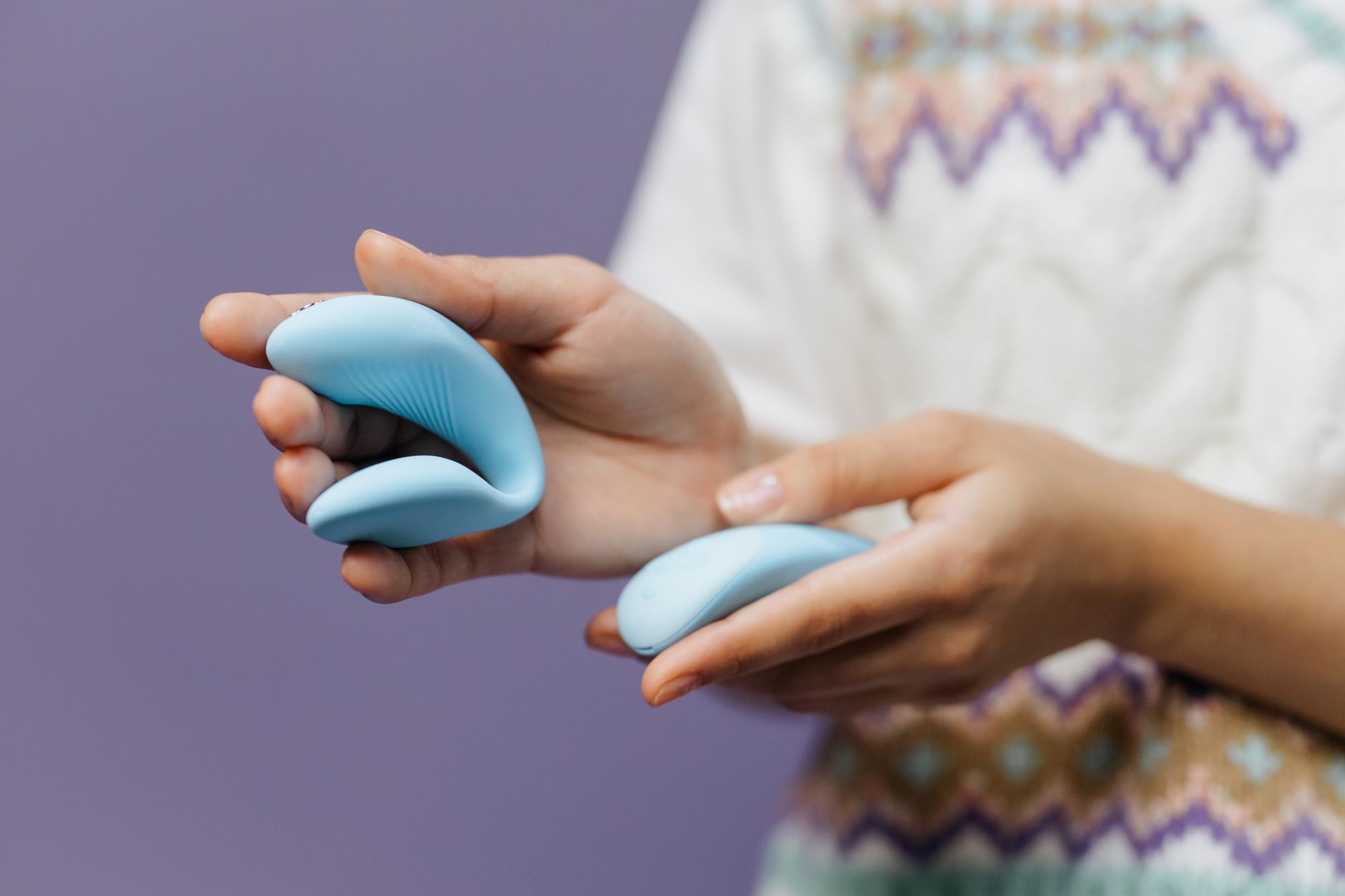
First time: Just hold the lemon vibrator. Don't turn it on. Let your hand adjust to its weight, its texture, the fact that you're holding something designed specifically for your pleasure. That's day one. Sounds boring. It's not. It's deconditioning shame.
Second time: Turn it on at the lowest setting. Don't use it on your body. Just listen to the sound. Feel it vibrate in your hand. Get familiar with what it does when you're not in a vulnerable position. Your nervous system can practice "this is safe" without the added layer of exposure.
Third time: Use it over your underwear or pajamas. Not directly on skin. This is the bridge. You're getting sensation, but with a buffer. Your brain knows you can stop instantly. You're building tolerance to the feeling of "I deserve this."
Only after those three steps does direct contact make sense. And by then, your nervous system has already begun to rewire.
The internal narrator is the real blocker
While you're using a lemon vibrator, you'll probably hear a voice. "This is silly." "You're being selfish." "What if my partner thinks this is weird?" "Normal people don't need this." That voice isn't fact. It's the internalized shame speaking.
Here's what I tell clients in my practice: notice the voice, but don't argue with it. Arguing with shame gives it power. Instead, you acknowledge it and stay. "There's that thought. I'm staying anyway."
After about six or seven times of doing this, the voice gets quieter. Your nervous system learns that pleasure is actually safe. The shame starts to release its grip.
Use it as a conversation starter if you have a partner
If you're partnered, shame often gets worse in secret. The secrecy itself becomes a shame spiral. Consider telling your partner that you're exploring your own pleasure with a tool, and that you'd actually like their support, not participation.
That conversation is terrifying for most people. But here's what I've seen thousands of times: partners are relieved. They're glad you're taking care of yourself. They're often curious. And the secrecy that was feeding shame? Gone.
If your partner reacts with judgment, that's data too. It tells you something important about whether this relationship supports your autonomy. That's a different conversation, but it's an important one.
Why lemon vibrators specifically help with shame
Lemon clitoral vibrators use suction, not just vibration. That changes the game when you're shame-blocked because suction feels less like "using a sex toy" and more like "receiving stimulation." There's a psychological difference between actively working yourself and passively receiving sensation.
The suction also creates a seal. You're held. That containment actually signals safety to your nervous system. It's a small thing, but it matters.
Build a small ritual around it
Shame thrives in chaos and secrecy. Ritual creates order and intention. So when you decide to use your lemon vibrator, create a micro-ritual around it.
Maybe it's: dim the lights, put your phone in the other room, play one specific song you love, light a candle. Nothing elaborate. Just five minutes of "this is mine, this is intentional, this is not sneaking." That shift from secrecy to ritual is where shame loses its grip.
What changes when shame starts to release
After four or five weeks of consistent use, most people report a shift. It's not that suddenly you feel zero shame. It's that your baseline changes. You start to believe, in your body not just your head, that your pleasure is legitimate.
That belief spreads. You're less apologetic in conversations about your needs. You make better choices about partners. You stop shrinking yourself to make others comfortable. A lemon vibrator can't do therapy, but it can start the rewiring.
The role of self-compassion
Here's what I've learned: shame responds to self-compassion in ways it doesn't respond to logic. Telling yourself "I should want this" doesn't work. But saying to yourself "I've been taught to be ashamed, and that was unfair, and I'm choosing something different now" does work.
Every time you use your vibrator, you're practicing an act of self-care in the face of internalized shame. You're saying "my pleasure matters." You're saying "I deserve this." Repeat that enough and your nervous system starts to believe it.
When shame has a bigger grip
If shame is severe, or if it's wrapped up in religious trauma or a history of abuse, a vibrator alone won't solve it. That's when working with a therapist who specializes in sexual shame is the right move. There's no weakness in that. It's using the right tool for a bigger job.
But for everyday shame, the kind that comes from cultural messaging and internalized judgment, a consistent practice with a lemon vibrator can genuinely shift your relationship to your own desire.
FAQ: Shame and pleasure with clitoral vibrators
Is it normal to feel embarrassed using a clitoral vibrator?
Completely normal. Most people feel some version of shame or embarrassment the first time. That discomfort isn't data that something is wrong with you. It's data that you've been shaped by a culture that makes female desire complicated. The embarrassment gets quieter with exposure and permission.
How do I stop feeling like I'm being selfish when I use a lemon vibrator?
Shifting that requires reframing what selfishness actually is. Using a vibrator alone for 20 minutes isn't selfish. It's self-care. You're taking care of your own nervous system and pleasure without asking anyone else to do that work for you. Actual selfishness is burdening others with needs you could meet yourself.
What if I feel guilty after using a lemon vibrator?
Post-orgasm guilt is real and it's often rooted in shame. Try this: after you finish, instead of rolling over or getting up, pause for two minutes. Put your hand on your heart and say something like "I deserved this." That small act of self-affirmation after pleasure begins to rewire the guilt response. Do it for a month and the guilt usually softens.
Can using a lemon vibrator help me enjoy sex with my partner more?
Yes, often significantly. When you know your own body and you've practiced receiving pleasure without shame, you bring that permission into partnered sex. You're more likely to ask for what you want. You're less likely to prioritize their pleasure over your own. That balance actually improves partnered sex for everyone.
How do I talk to a partner about my shame around pleasure?
Start with vulnerability: "I'm working on some beliefs I picked up about pleasure being wrong or selfish. It's not about you or our sex life. It's about me relearning that my desire is okay." Most partners respond to honesty. Avoid making it about what they should be doing differently. This is about your relationship to your own body.
Will using a lemon vibrator alone make me prefer it to partnered sex?
No. In fact, most people who work through shame around solo pleasure report that their partnered sex improves because they're more relaxed and more knowing about what they actually want. Knowing yourself doesn't replace partnership. It deepens it.
The deeper shift
Using a lemon vibrator when you're shame-blocked isn't really about the toy. It's about your nervous system learning that you're safe. That your desire is legitimate. That pleasure is a normal, healthy part of being human.
That rewiring happens slowly, in small moments of choosing yourself over the voice that says you shouldn't. And over time, that voice gets quieter. Your breath gets deeper. Your pleasure becomes less tangled with guilt.
If you're ready to start that work, you don't need anything fancy or expensive. You need permission. You need privacy. And you need something designed to help you receive sensation. A lemon clitoral vibrator can be exactly that.
Ready to take the next step? We're here to help you figure out what works for your body and your journey. Reach out if you have questions about products, privacy concerns, or just need support in reclaiming your pleasure.