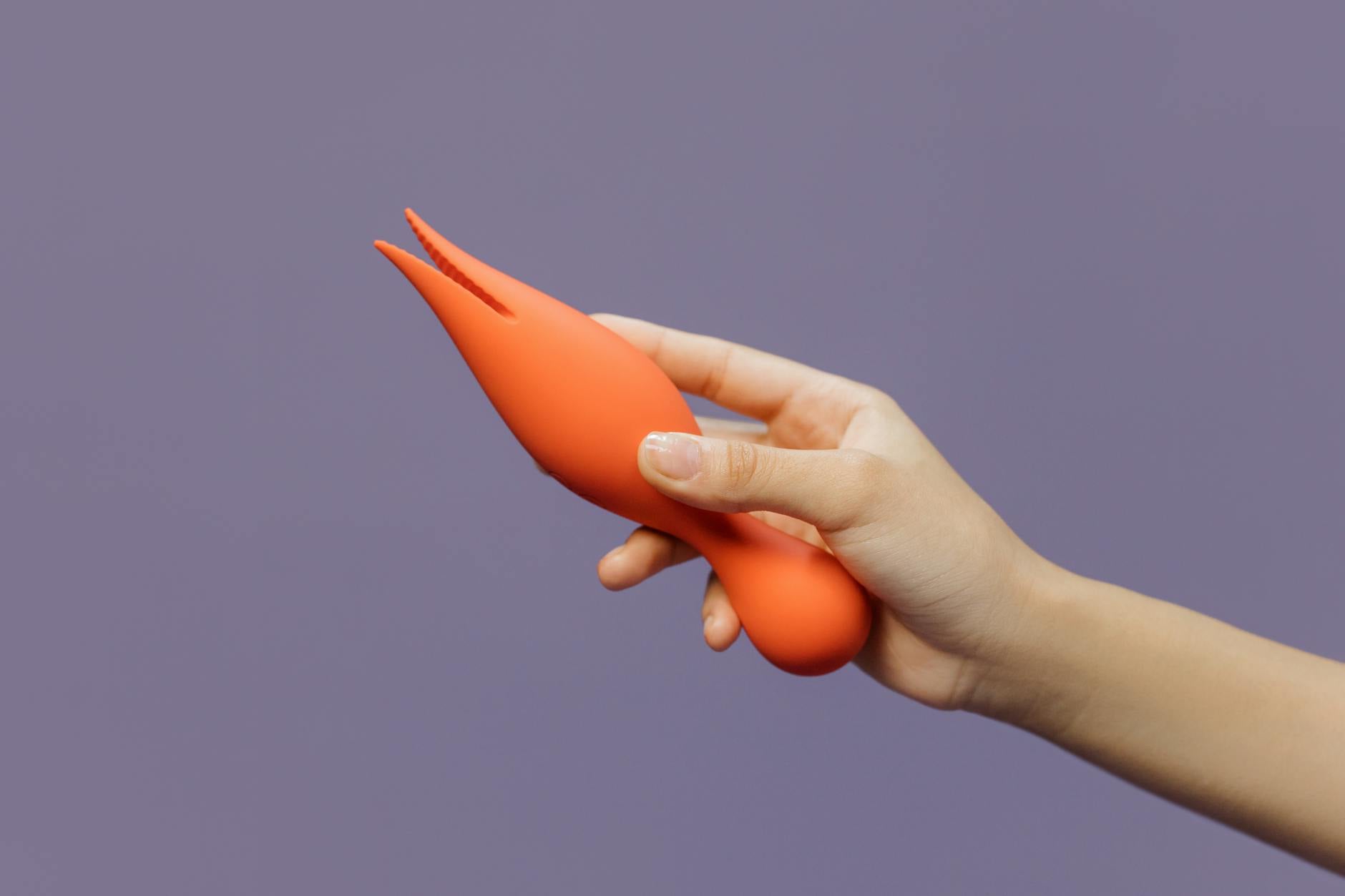
Let's talk about pain during sex
Here's what I hear most often: "I want to enjoy sex again, but it hurts, and I'm embarrassed to admit it." Pain during sex (whether it's sharp, burning, or just a dull ache) is not rare, not a reflection of your desire, and not permanent. And it's absolutely worth addressing.
What's less talked about is how lemon vibrators can actually help you move through this, not around it. They're not a cure. But they're often a bridge.
Why sex hurts (and why it matters that you know)
Pain during or after sex can come from several places. Sometimes it's physical, like vulvovaginal atrophy (tissue thinning from hormonal changes), endometriosis, or pelvic floor tension. Sometimes it's psychological, like anxiety, past trauma, or pressure around performance. Often it's both tangled together so tightly you can't tell them apart.
The most important thing to know is this: your brain is protecting you. When pain happens, your nervous system learns to guard. The next time sex approaches, you tense. That tension creates more pain. Then your brain guards harder. It's a loop.
Breaking that loop requires three simultaneous moves: addressing the physical cause (which might mean seeing a pelvic floor physical therapist or a gynecologist), calming your nervous system, and rebuilding a positive association with pleasure. Lemon clitoral vibrators fit into move number two and three.
How lemon vibrators help when sex hurts
There are three reasons lemon vibrators are particularly useful for this specific challenge.
First, they bypass penetration. If penetration is what causes pain, a lemon vibrator lets you experience arousal and orgasm without that trigger. This matters because pleasure doesn't require penetration. Your clitoris has 8,000 nerve endings. Your vagina has maybe 1,400. Guess which one's easier to access without pain.
Second, they give you control. When you're using a toy on yourself (or with a partner you trust watching), you control speed, pressure, and when to stop. No negotiation, no guessing what your partner wants. This autonomy is huge for rewiring your nervous system out of protection mode.
Third, they work well with lubrication. If your pain is tissue-related, a water-based lube plus a suction vibrator like the Lem means you're not relying on friction at all. Suction stimulates nerves without mechanical pressure. That's often the difference between "this hurts" and "this feels good."
The practical steps
Step one: Start solo, not with a partner. Your nervous system needs to learn that pleasure is possible without pain. That learning happens best alone first. Use a lemon vibrator in a safe, comfortable space. No pressure. No audience. No timeline.
Step two: Use plenty of water-based lubricant. I mean more than you think. Lubrication reduces friction, which reduces pressure on sensitive tissue. If you're dealing with vulvovaginal atrophy or any tissue sensitivity, lube is non-negotiable. Brands like Hyalo Gyn or Sliquid are designed specifically for sensitive vulvas.
Step three: Start at the lowest setting. The Lem has seven intensity levels. Start at one or two. Let your body get used to the sensation. You can always increase; you can't unscare yourself if you jump too high too fast.
Step four: Focus on sensation, not orgasm. This one flips most people's instinct. The goal right now is not to come. It's to prove to your nervous system that touch can feel good. Spend 15-20 minutes just exploring. What pressure feels good? What speed? What pattern? Notice without judgment.
Step five: If it still hurts, pause and breathe. If you feel pain, stop. Breathe slowly (your nervous system needs the signal that you're safe). Try again gently, or move to a different area. Pain is information. Respect it.
When to bring a partner in
Once you've had a few solo sessions where pleasure felt possible, you can involve a partner if you want to. The conversation is key here.
Tell them: "I'm working through some pain, and I want to explore what feels good with a lemon vibrator. I'd love you to be present, but I need to lead. Can you be okay with that?" A good partner will say yes. A reluctant partner is telling you something too, and that's worth sitting with.
If they're in the room, they can hold the vibrator (with your direction), but often it's better if you do it yourself at first. You know your body's signals best.
The nervous system piece (this is where the real change lives)
Here's what most pain-during-sex articles miss: the physical fix is half the work. The other half is retraining your nervous system to expect pleasure instead of pain.
Every time you use a lemon vibrator and feel good (or even just feel neutral, not bad), you're creating a new neural pathway. Your brain learns: "Touch can be safe. Pleasure can happen here." That learning compounds. After five sessions, you might notice your body tenses less. After ten, arousal might come faster. After twenty, you might feel different during partnered sex too.
This is not magical thinking. This is how nervous systems work.
What doesn't help (and why)
Pushing through pain. If something hurts, doing it anyway to "get past it" only teaches your nervous system that sex is dangerous. That's the opposite of what you want.
Ignoring the emotion underneath. If you have a history of sexual trauma, for example, a lemon vibrator helps with the physical piece, but you probably need a trauma-informed therapist too. Those are two different conversations happening at the same time.
Comparing your timeline to someone else's. You don't know how long this takes. Some people feel a shift in two weeks. Others need three months. Both are normal.
When to seek professional help
If pain is sharp, persistent, or worsening, see a gynecologist who specializes in sexual health or pain. Ask specifically about vulvodynia, endometriosis, or pelvic floor dysfunction. These are treatable.
If you have a history of sexual trauma, find a trauma-informed therapist. Ideally someone trained in somatic therapy (body-based therapy). A good therapist and a lemon vibrator can work together beautifully.
If anxiety is the root (you're fine physically, but your mind is spiraling), a relationship therapist or sex therapist can teach you grounding techniques that rewire what your brain expects from sex.
None of these things means something is wrong with you. They mean you deserve support.
The part I need you to hear
Pain during sex doesn't mean your body is broken. It doesn't mean you're not sexy. It doesn't mean you'll never enjoy sex again. It means your nervous system learned a protective pattern, and protective patterns can be unlearned.
A lemon clitoral vibrator is a tool for that unlearning. It's accessible, it's discreet, and it puts you in control. Use it gently, use it consistently, and notice what shifts. Your pleasure matters. And it's worth the time it takes to rebuild.
FAQ
Can I use a lemon vibrator if penetration is painful?
Yes. A lemon vibrator bypasses penetration entirely. It stimulates the clitoris, which is external and typically less sensitive to pain triggers than penetrative contact. This can let you experience arousal and orgasm without the pain component, which is often the first step in retraining your nervous system.
What if I feel pain even with the vibrator?
Stop immediately and breathe. Pain is information. If discomfort appears during vibrator use, it might mean the pressure is too intense, your tissues are too sensitive for that moment, or there's an underlying physical condition that needs professional attention. A pelvic floor physical therapist can assess whether the pain is structural.
How long does it usually take to feel better?
It varies. Some people notice a shift after five to ten uses. Others need a few months of consistent, gentle exploration. The timeline depends on what's causing the pain (hormonal, structural, psychological) and how long the pain pattern has been active. Be patient with yourself.
Should I tell my partner I'm using a vibrator for this?
That's up to you. If you're in a committed relationship, transparency usually helps. You might say something like: "I'm working on this pain during sex, and I'm exploring with a vibrator to understand what feels good. I'd like your support." A partner who loves you will want you comfortable.
Is there a specific lemon vibrator that's best for painful sex?
The Lem is designed with suction rather than vibration alone, which means it stimulates without friction. That's often gentler for sensitive tissue. But the best vibrator is the one that feels right to your body. Start with the lowest intensity and adjust from there.
What if pain is from hormonal changes like perimenopause?
Hormonal shifts can thin tissue and reduce natural lubrication, which makes touch feel uncomfortable. A lemon vibrator with generous lube is helpful here. You might also ask your doctor about vaginal estrogen creams, which can reverse tissue thinning in weeks. Again, the vibrator helps with pleasure while the medical piece addresses the root cause.