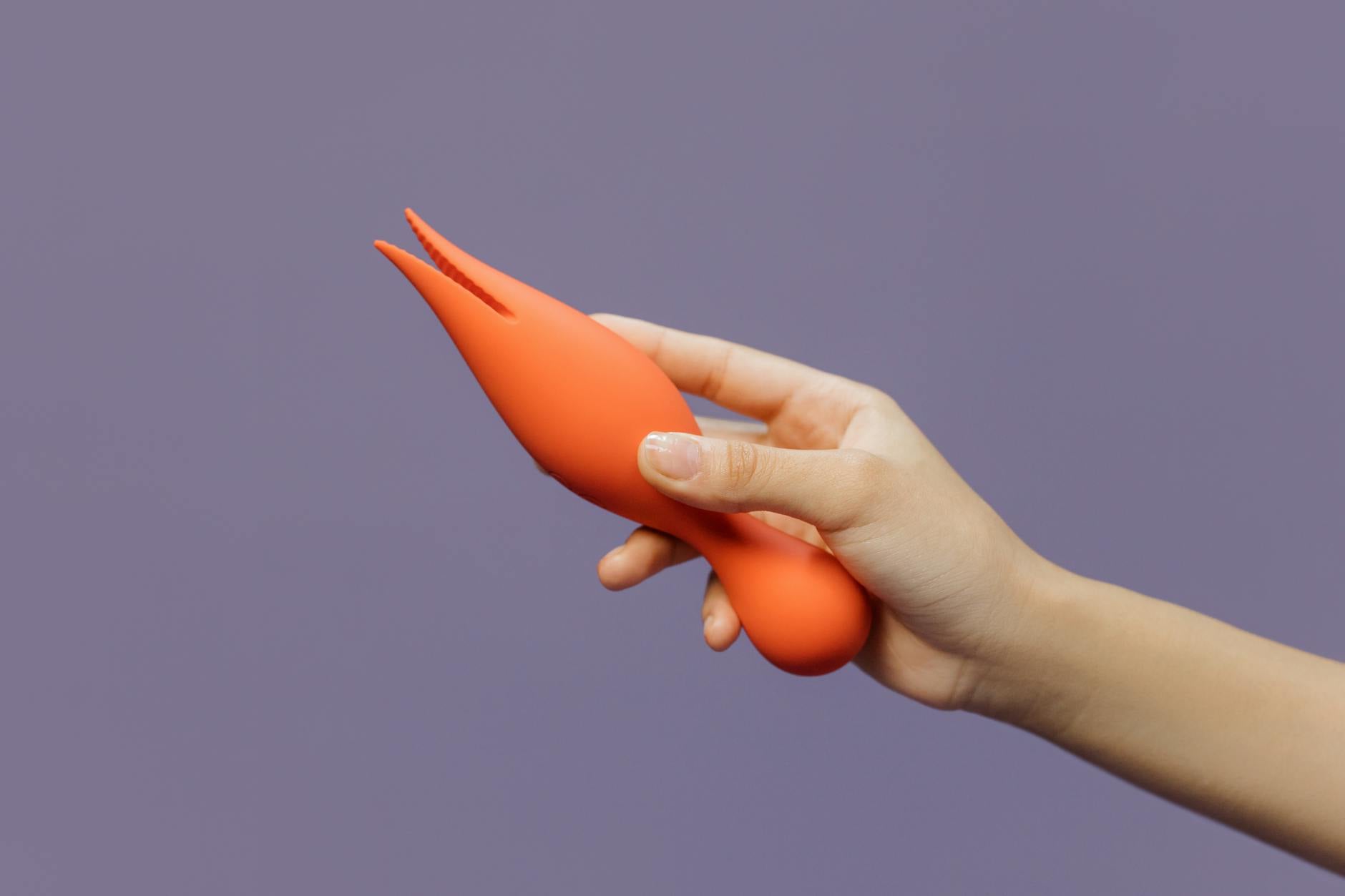
How to Use a Lemon Vibrator With a Low-Libido Partner
Let's be real: desire mismatch is one of the most common problems I see in my practice, and one of the most painful to sit with. One partner wants sex twice a week. The other wants it once a month. Or less. No one is wrong. But the gap feels like rejection, and rejection breeds resentment, and resentment is the slow death of intimacy.
Introducing a lemon vibrator into that dynamic is delicate. It's not a magic fix. But when done with the right framing and conversation, a clitoral vibrator like the Lem can actually be a bridge back to connection rather than another source of conflict.
Here's how to do it without making things worse.
Why desire mismatch feels like a bigger problem than it is
Physiologically, libido fluctuates. Stress tanks it. Medications kill it. Hormone shifts reshape it. So does aging, trauma, depression, relationship rupture, and sometimes just the accumulated weight of routine.
But here's what makes it emotionally catastrophic: the higher-desire partner reads low libido as personal rejection. "He doesn't want me anymore." "She's not attracted to me." The lower-desire partner reads the pressure as demand. "I'm not allowed to just exist without performing." Both interpretations are understandable. Both are also usually wrong.
When desire mismatch shows up in my sessions, the first thing I do is separate the two conversations. One conversation is about the lower-desire partner's body and life circumstances. The other is about the higher-desire partner's need for connection and reassurance. Muddling them together is why couples spiral.
The three reasons desire actually shifts in long-term partnerships
1. Biology is real. Depression, thyroid dysfunction, medication side effects, hormonal shifts, and straight-up burnout all suppress libido legitimately. If your partner has low desire and nothing else has changed emotionally, get them a blood panel and a check-in with their GP.
2. Resentment builds silently. A partner with unmet emotional needs often has diminished sexual desire as a symptom, not the root cause. They're angry and don't know how to say it. Or they said it repeatedly and weren't heard. The body protects itself by shutting down.
3. Routine erases novelty. After years together, sex becomes predictable. The same positions, the same timing, the same everything. For some people, that's safe and good. For others, it's a desire killer. Nothing feels broken, but nothing feels interesting either.
A lemon clitoral vibrator addresses issue three directly. It introduces sensation novelty. But it can only work if you've addressed issue one (get them to a doctor) and issue two (have the emotional conversation first).
Why introducing a vibrator feels risky
Here's what I hear: "If I suggest a vibrator, he'll think I'm saying he's not enough." Or: "She'll think I'm trying to trick her into sex."
These fears are legitimate because you're right. Without context, a vibrator does land as criticism. It reads as "you're failing me, so here's a tool to fix the gap." Which is exactly how NOT to introduce one.
Instead, the frame needs to be collaborative and specific. Not "I want more sex." Not "This will help you orgasm." But: "I miss feeling connected to you. I know your body feels different than it used to. I found this tool that might take pressure off you and help us both feel good. Can we explore it together, no expectations?"
The magic word is together. Not to you. Not for you. With you.
The conversation before the toy arrives
Don't just leave a lemon vibrator on the nightstand. That's how arguments start.
Pick a moment when you're both calm, clothed, and not in the bedroom. Vulnerability is easier when you're not already in a charged space.
Say something like: "I've been thinking about us. I know sex feels complicated right now, and I don't want you to feel pressured. But I also don't want to stop being intimate. I looked into some things that might help take the intensity down while keeping the pleasure up. Would you be open to exploring that with me?"
Wait for an actual answer. Not a defensive one. Not a sarcastic one. Listen to what they say about why desire has shifted. Often, the reason is not what you assumed.
If they say yes, say this: "We decide together what we're comfortable with. If it doesn't feel right, we stop. And it doesn't mean anything about you or us."
How to use a lemon clitoral vibrator as a couples tool
This is where the Lem shines. Air-suction clitoral vibrators like the Lem feel less aggressive than traditional vibrators. They don't require the same active engagement. The sensation is more concentrated, which means less time under the covers and less performance pressure.
Here's the structure that works:
Session one: Exploration, not sex. Undress if you want to, but the goal is not orgasm. The goal is novelty and play. Start on the lowest setting. Take turns holding it. Notice what feels good. This is foreplay, not the main event. Spend 20 minutes and call it done. The point is to demystify it.
Session two: Pleasure focus. Now you can move toward orgasm, but slowly. The lower-desire partner can use it on themselves while the higher-desire partner is present but not performing. This is key: they're in charge of their own sensation. You're witnessing it, not making it happen.
Session three and beyond: Integration. Once you both feel comfortable, the vibrator becomes part of your regular repertoire. Not every time. Not as a replacement. As an option.
The rhythm here matters. You're showing your partner that you're not desperate or demanding. You're patient. You're willing to go slow. That patience is sometimes more aphrodisiac than the toy itself.
What to do if your partner says no
Respect it. Fully.
Don't push. Don't sulk. Don't bring it up again. Instead, go back to the root conversation: "Tell me what would help you feel desire again. What do you actually need from me?"
The answer might be less work stress. More emotional intimacy. Therapy for their own stuff. A different time of day. More non-sexual touch. Sometimes desire returns when you stop chasing it and start addressing what's actually broken.
The long game with mismatched desire
If you've been in a lower-desire phase for months or years, a lemon vibrator won't fix the relationship. It can supplement a good conversation and a real commitment to change. But it can't replace the work.
Consider couples therapy. Not because the relationship is dying, but because how to use lemon vibrators with partners is just logistics. What you're actually solving for is emotional safety, vulnerability, and the ability to ask for what you want without fear.
Desire often comes back when that foundation is rebuilt. Sometimes it doesn't. Sometimes you're just in different seasons of your life and you need to decide if you can live with that gap. That's a bigger conversation than any vibrator can address.
But if there's willingness on both sides, and you're intentional about how you bring a tool like the Lem into the conversation, it can be genuinely transformative. It's a way of saying: "I'm not giving up on us. I'm willing to try something new."
FAQ: Low Libido, Lemon Vibrators, and Couples
How do I know if low libido is a medical issue or a relationship issue?
If it happened suddenly or your partner is experiencing other symptoms (fatigue, mood changes, weight shifts), get them to a doctor first. If it's been gradual and coincides with relationship stress, emotional distance, or unresolved conflict, it's likely relational. Most of the time it's both. Address the medical piece and the emotional piece simultaneously.
Can a vibrator make low libido worse by creating pressure?
Absolutely, if it's framed wrong. If it feels like "this will fix you," your partner will feel broken. If it feels like "this is for us to play with together," it's different. The frame is everything.
What if only one of us wants to use the vibrator?
That's fine. Your partner doesn't have to enjoy the Lem for it to help your sex life. They just need to be okay with you using it. Many couples find that when one person is having consistent pleasure, the pressure lifts and desire actually comes back for the other person. It's counterintuitive but real.
Is using a vibrator a sign we have a problem?
No. Using a vibrator is a sign you're willing to experiment. Most couples with thriving sex lives use toys. The couples with problems are usually the ones who won't talk about what they actually want.
How long does it take for desire to come back after using a vibrator together?
There's no timeline. Some couples reconnect in weeks. Others take months. Some people discover that low libido was never the problem, just the symptom, and they need to address the actual issue first. Be patient. This is a process, not a fix.
Should we use a vibrator every time we have sex?
No. That defeats the purpose. The point is to add novelty and pleasure, not to make it a requirement. If you're using it every single time, it becomes routine just like sex without it did. Rotate. Mix it up. Keep it interesting.