Let's talk about what changed
Your clitoris used to respond one way. Now it responds differently. Maybe touch that felt amazing five years ago now feels too intense or weirdly numb. Maybe you need a totally different kind of stimulation to reach orgasm. Maybe it just feels like your body's pleasure settings got rewired without your permission.
Here's what I tell my clients: your clitoris isn't broken. It's responding to something. The question is figuring out what, and then finding the right tool.
Why clitoral sensation shifts
Clitoral sensitivity is wildly more complex than most people realize. It's not just about age, though that matters. It's also stress, medication, relationship changes, hormonal fluctuations, and honestly, what you've been doing for pleasure up until now.
When you use the same stimulation pattern for years, your nervous system adapts to it. That's neurological, not psychological. Your clitoris literally becomes less responsive to that specific type of touch over time because your brain stops treating it as novel information. This is why what worked perfectly at 25 might feel boring or insufficient at 35.
Add hormonal shifts, medication like SSRIs that dull sensation, prolonged stress that restricts blood flow, or even just the kind of pelvic tension that comes from holding yourself together through a hard year. All of this changes how your clitoris responds.
Why vibration and suction feel different
Most traditional vibrators work through oscillation. They buzz at a frequency that stimulates nerve endings through rapid, repetitive contact. If your clitoris has become desensitized to that kind of stimulation, you might need more intensity, higher frequencies, or longer warm-up time.
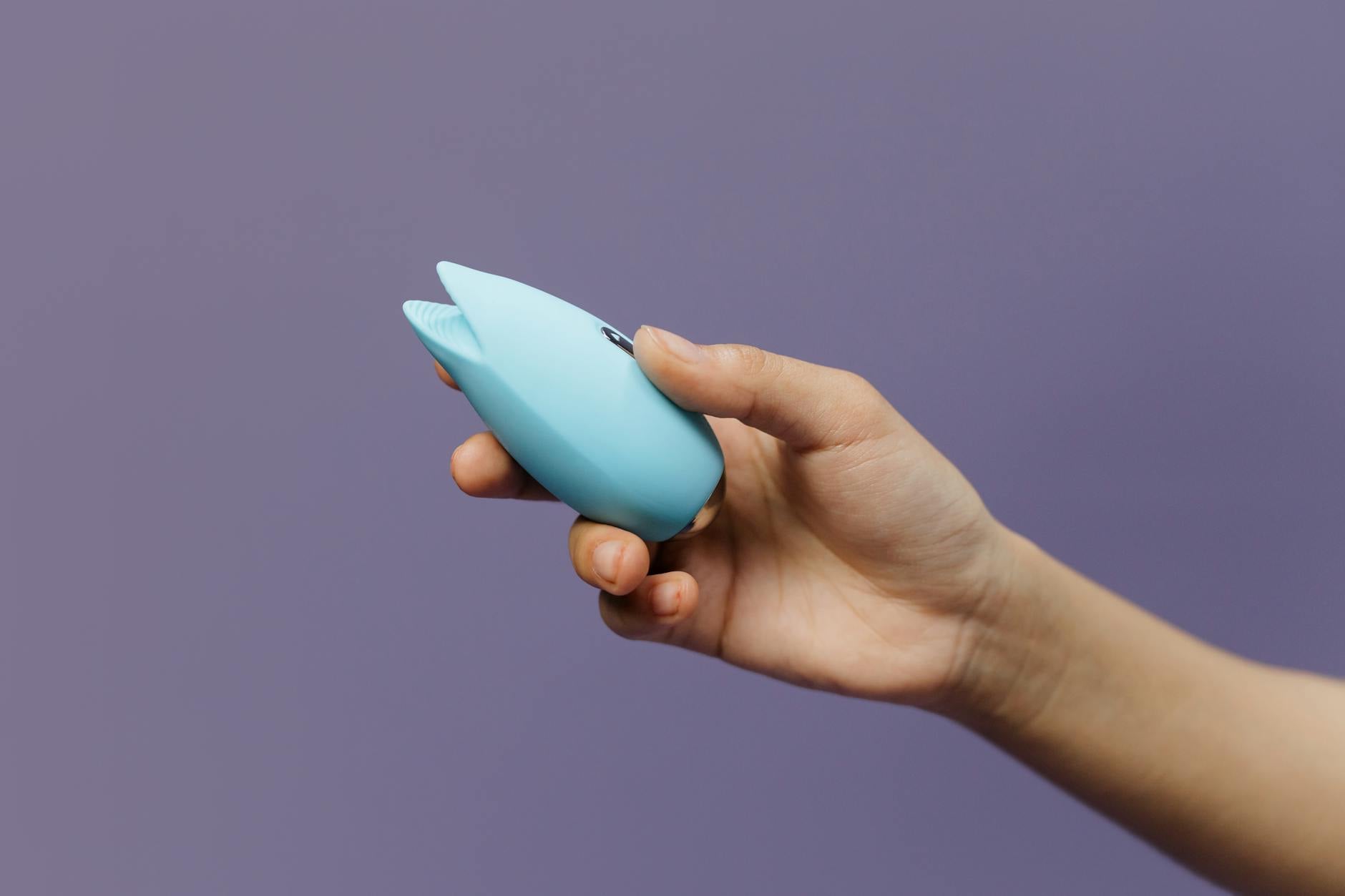
Lemon clitoral vibrators and other suction toys work completely differently. Instead of vibration, they create a gentle vacuum and release pattern. This stimulates the clitoris through pressure change rather than mechanical friction. The sensation is less like buzzing and more like a gentle pulse.
For people whose clitoris has stopped responding well to traditional vibration, suction often works because it's hitting different nerve pathways. Your body hasn't adapted to this pattern yet because you probably haven't used it for years. It's neurologically novel again.
The clitoris has 8,000 nerve endings. You get to try different ways of waking them up.
When sensitivity gets worse with age
Most of my clients in their 40s and beyond report that direct clitoral touch becomes uncomfortable. The tissue gets thinner with less estrogen. The area becomes more sensitive to pressure but sometimes less responsive to light touch. This sounds like a contradiction, but it's not. It means you might need gentler initial contact but more sustained stimulation overall.
Lemon clitoral vibrators can be adjusted to lower suction levels, which is perfect for this pattern. You're getting consistent, sustained stimulation without the jackhammer sensation that aggressive vibration creates. How Lemon Vibrators Work When Your Clitoris Feels Numb From Stress explores this in depth if you're dealing with that specific issue.
Medication, stress, and clitoral response
If you're on SSRIs, some blood pressure medications, or even just dealing with chronic stress, your clitoris might feel like it's operating behind a glass wall. You can feel touch, but the pleasure signal is muted. This is because these medications and stress hormones affect dopamine and norepinephrine, which are crucial for sexual response.
No amount of willpower or better partnering fixes this. You need different stimulation. Lemon suction toys work well here because they're stronger than light touch but not the intense, narrow focus of a traditional vibrator. They create a broader field of stimulation that can wake up sensation even when the nervous system is partially suppressed.
The warm-up conversation
If your clitoris responds differently now, one of the first things to check is warm-up time. Most people think they need the same amount of foreplay they always did. But if hormones have shifted, stress has increased, or you're on medication that affects arousal, you might need 20 or 30 minutes instead of 5.
This isn't failure. It's just how your body works right now. A lemon clitoral vibrator can help bridge this gap because you can start at very low settings while your nervous system is still waking up, then increase intensity as blood flow and arousal build. You're meeting your body where it is rather than forcing it into the old pattern.
When to get help from a specialist
If clitoral sensation suddenly changed and doesn't improve within a few weeks of trying different tools or techniques, talk to a menopause doctor or a gynecologist who specializes in sexual health. Sudden changes in sensation can sometimes signal something that needs medical attention, like nerve issues or hormonal imbalances that are worth investigating.
But most of the time, the clitoris just needs permission to adapt and the right kind of stimulation to respond. How to Use Lemon Vibrators When You Want More Intense Sensation and Faster Results walks through finding the right intensity level for your current sensitivity.
Starting with lemon vibrators if you're new to them
If you've never tried a lemon clitoral vibrator or any suction toy before, expect a learning curve. It feels different than anything you've used, so your brain needs a few tries to figure out what it's doing.
Start at the lowest suction level. The first time, you might not feel much because you're expecting the sensation to build faster than it does. Give it 10 to 15 minutes before deciding if it works for you. Your clitoris needs time to respond to a new pattern.
If you're comparing it mentally to vibrators you love, stop. You're not trying to replace them. You're adding a different tool to your pleasure toolkit because your body needs different stimulation right now. Permission to have more than one toy for different times and different needs is part of what pleasure gets to be.
The partner conversation
If you're exploring this with a partner, tell them what's actually happening. "My clitoris responds differently now, so I need different stimulation" is useful information. "I'm using a lemon clitoral vibrator to figure out what works" explains why you're trying something new without sounding like something is wrong.
Many partners find it a relief to know there's a tool designed for exactly this shift. It takes pressure off them to somehow intuitively know that your body needs something different.
What changes and what stays
Your capacity for pleasure doesn't shrink just because your clitoris responds differently. What changes is the specifics. The frequency that used to work might not. The amount of time might be different. The kind of touch might need to shift.
But your clitoris still has 8,000 nerve endings. Your brain still lights up during orgasm the same way. Your body's capacity for sensation is still there. You're just meeting it with better tools and better information than you had before.
That's not adapting down. That's evolving.
FAQ
Why does my clitoris feel numb even when I'm aroused?
There are a few reasons this happens. If you're on medication like SSRIs, antidepressants, or certain blood pressure meds, those directly affect the neurotransmitters involved in sexual response. Chronic stress does the same thing. Sometimes it's also about stimulation pattern. If you've been using the same toy the same way for years, your nervous system genuinely adapts and stops sending pleasure signals from that specific type of touch. A different tool, especially something like a lemon clitoral vibrator with a different stimulation pattern, often works because your body hasn't adapted to it yet.
Can my clitoris regain sensitivity if I take a break from toys?
Sometimes, yes. If you've been using the same vibrator intensely for years, taking a month or two off can help reset your nervous system's response. But this only works if the numbness is from adaptation, not from hormonal changes or medication. If it's hormonal, a break won't help. You need different stimulation. If it's medication, talk to your doctor about whether the dose or timing can change. If it's stress, the break only helps if you're also actually addressing the stress.
Is it normal for clitoral sensitivity to change in your 40s?
Completely normal. Estrogen affects tissue thickness and blood flow in the clitoris. As estrogen shifts in your 40s and beyond, everything changes. Direct touch might feel more intense. Light touch might feel less responsive. This isn't your clitoris failing. It's your body adapting to new hormone levels. Using a lemon clitoral vibrator designed for this shift can be way more effective than trying to force your body to respond the old way.
What if lemon vibrators don't work for me?
Then you probably need something else. Some people respond better to broader vibration patterns than suction. Some need air-pulse toys. Some need wands that give you more control over pressure. The point of understanding that your clitoris responds differently now is that you get to experiment instead of just assuming you're broken. Try a few different tools, different intensities, different patterns. Your body will tell you what works.
Can stress actually make my clitoris less sensitive?
Absolutely. When you're stressed, your nervous system is in sympathetic activation. Blood gets redirected away from your genitals and toward your muscles and brain. Stress hormones suppress dopamine and norepinephrine, which are essential for sexual arousal and sensation. Long-term stress actually changes your baseline sensitivity. This improves when stress decreases, but it also helps to use stronger, different stimulation while you're working on the stress itself.
Should I tell my partner my clitoris is responding differently?
Yes, unless you specifically don't want their input. If you're partnered and your clitoris suddenly needs different stimulation, your partner is probably going to notice something changed and might feel like they did something wrong. Being clear that it's a biological shift, not about them, usually helps. And if you invite them to explore new tools like a lemon clitoral vibrator with you, it can actually deepen intimacy instead of creating distance.
Your clitoris isn't a static thing. It's an organ that responds to hormones, stress, medication, age, and what you've been doing for pleasure. When that changes, you get to change your approach. That's not settling. That's getting smarter about your own pleasure.
Ready to explore what works for your body right now? Start here for the full guide on choosing the right lem vibrator.
Sources
Meston, C. M., & Frohlich, P. F. (2000). "The neurobiology of sexual function." Archives of General Psychiatry, 57(11), 1012-1030.
Basson, R. (2002). "Women's sexual function and dysfunction: Current uncertainties, future directions." International Journal of Impotence Research, 20(6), 466-478.
Levin, R. J. (2014). "The clitoris: An appraisal of its reproductive functions over the life course." Reproductive Sciences, 22(9), 1100-1106.