
Let's talk about what intensity actually means
Most people assume vibrators work the same way. Turn it on, dial up the power, feel more sensation. Done. But that's not how lemon clitoral vibrators work. Intensity on a lemon vibrator isn't just "louder" or "stronger." It's a completely different conversation between your body and the device.
When you move up intensity levels on a quality lemon vibrator, you're not just increasing motor speed. You're changing the rhythm of the suction pulse, the pattern of release and pressure, and sometimes the width of the stimulation field itself. That matters because your clitoris doesn't respond to "more" the way you might think it does.
The physics of pattern variation
Here's what actually happens when you shift patterns on a lemon vibrator. Traditional vibrators use oscillation. They go back and forth, typically 80 to 4,000 times per second depending on the device. Your nerve endings experience this as constant tremor. It works. It's reliable. But it's one note.
Lemon vibrators use pulse suction, which is fundamentally different. The device creates a gentle seal around the clitoris and applies rhythmic pressure and release. When you change the pattern, you're changing the timing of that pulse sequence. Some patterns build pressure gradually. Others spike quickly and fade. Some pulse in waves. Some almost flutter.
Your clitoris has about 8,000 nerve endings clustered in a space smaller than a grain of rice. They respond to pattern variation wildly differently than they respond to vibration intensity alone. One pattern might feel like steady building pressure. The next might feel like micro-orgasmic waves. The third might feel like nothing, because your body has already habituated to that exact timing.
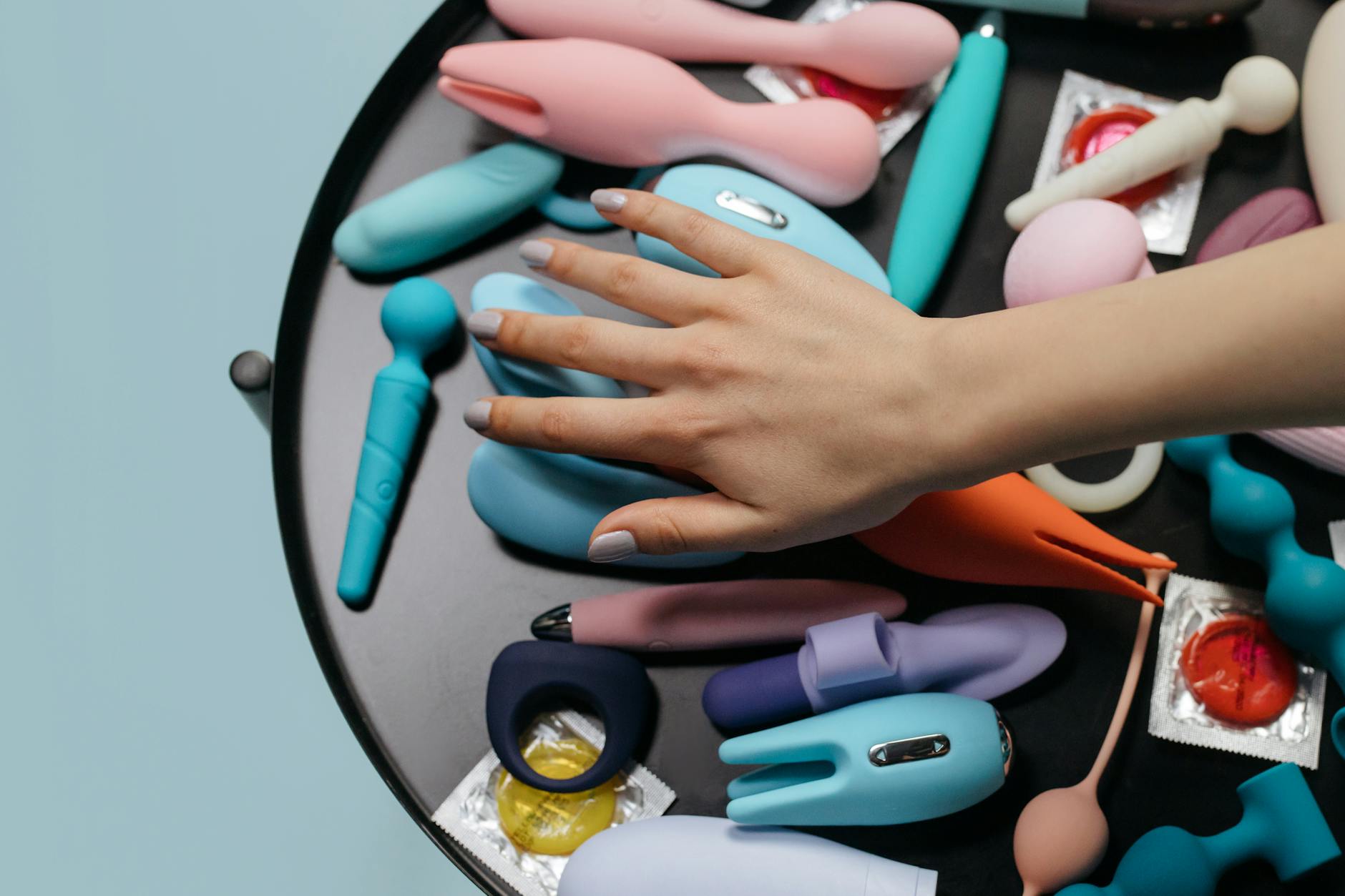
Photo by cottonbro studio on Pexels
Intensity levels explained (and what they actually feel like)
Most lemon vibrators offer 5 to 10 intensity settings. Here's what's happening at each tier.
Levels 1-2. This is where you start every single time, even if you've used a lemon vibrator for years. At these levels, the pulse is gentle and the suction pressure is minimal. You're building neural sensitivity and teaching your body to recognize the sensation without overwhelm. Many people skip these levels because they seem "too weak." Don't. These low levels are where your body learns to respond. Rush past them and you'll hit a plateau at level 6 that feels impossible to break through.
Levels 3-4. The pulse becomes more pronounced. The suction pressure increases. You're starting to feel individual pulses rather than a continuous sensation. If you have sensation sensitivity or recovering nerve endings, this is often where the magic happens. Clients who've spent months numb often report their first real feeling at level 3. That matters.
Levels 5-7. This is the zone where intensity meets pleasure for most bodies. The pulse is strong but not jarring. Suction pressure is noticeable. For many people, these levels are where orgasm becomes not just possible but likely. If you're exploring lemon vibrators for the first time, spending a week experimenting in this zone teaches you more about your body than rushing to level 9.
Levels 8-10. High intensity feels aggressive to some bodies and transcendent to others. At these levels, pulse variation becomes less important. You're basically working with sustained pressure and rapid-fire pulsing. Some people need these levels to feel anything. Others find them jarring. There's no wrong answer. The point is to know whether you're genuinely responding to high intensity or just chasing sensation because you think you should.
Pattern variation across the range
Different lemon vibrators offer different pattern menus. But the principles are consistent.
Steady pulse patterns. These offer consistent intervals of pressure and release. No surprises. No building intensity. Just reliable rhythm. These patterns are useful when your body is learning the device, when you're anxious, or when you need a predictable path to pleasure. Steady patterns are underrated because they feel "simple." But consistency is not boring. Consistency is information for your nervous system.
Escalating patterns. These patterns build intensity gradually. The pulse starts gentle and increases over 10 to 20 seconds. Then it resets or sustains at the peak. These patterns mimic how many bodies naturally respond to stimulation. They're useful when you're exploring and want your body to guide the intensity rather than your brain choosing it upfront.
Wave patterns. Pressure rises and falls in a wavelike motion. Some people describe these as almost meditative. Others say they feel disorienting. Wave patterns are wildly individual. The only way to know is to try one for a full minute at a moderate intensity level, then decide.
Pulse-and-hold patterns. Quick pulses followed by brief moments of sustained pressure. These mimic certain oral techniques. They work well for people whose bodies respond to texture variation rather than pure intensity.
How sensitivity changes the conversation
Pattern and intensity don't exist in isolation. They interact with your own body's sensitivity, which shifts constantly.
If you're someone whose clitoris tends toward numbness (a common response to stress, medication, or recovering sensation), you might be tempted to jump straight to level 8 and complex patterns. That's often exactly wrong. Your nerve endings need gentle, consistent input to wake up. Start at level 1 or 2 with a steady pulse pattern. Spend 5 to 10 minutes there. Let your body recognize the sensation. Then experiment within that low range. You'll be shocked how much variation level 2 and level 3 offer once your body is actually paying attention.
If you're someone whose clitoris tends toward oversensitivity (common during hormonal surges, after pelvic floor physical therapy, or in certain stress states), high intensity can feel sharp or even painful. Don't assume that's the device's fault. Try levels 2 through 5 with pattern variation as your primary tool. Many people with sensitive bodies find their most satisfying experiences using lower intensity with pattern switching every 30 to 60 seconds. Your body gets data, novelty without overstimulation, and a chance to respond.
The plateau problem and how pattern rotation breaks it
You've probably experienced this. You find a setting that works beautifully. Orgasm happens. You're thrilled. You use it again the next day and feel basically nothing. Your body has habituated to that exact stimulus. This is normal neurology, not a device failure.
Here's how to break through it. When you hit a plateau, don't increase intensity. Change the pattern. Spend 2 to 3 minutes at your current intensity level but switch to a completely different pattern sequence. Your nerve endings reset because the timing is new. Often that's enough to reawaken sensation.
If pattern switching alone doesn't work, drop intensity by one level but return to a pattern you haven't used in a few days. The combination of reduced intensity plus pattern novelty resets habituation faster than pushing harder ever will. This is why having access to multiple intensity levels and pattern options on a lemon vibrator matters more than having a single "strongest" setting.
Matching intensity and pattern to what you actually want
There's a difference between intensity that feels good and intensity that serves your goal. If you're exploring sensation after a long break from touch, intensity level 2 or 3 with a steady or wave pattern might be perfect. If you're chasing orgasm quickly, you might need levels 5 to 7 with pattern variation every minute. If you're recovering from pelvic floor tension, gentle intensity with sustained pressure (not rapid pulse) might be what your body actually wants, even if it doesn't feel "strong."
The only way to know is to experiment deliberately. Pick one intensity level and one pattern. Spend a full week exploring that combination in different contexts: morning, evening, stressed, relaxed, aroused, neutral. Your body will tell you what information it needs. Listen to that instead of chasing what you think you should feel.
FAQ: intensity, patterns, and what actually works
Why do I feel nothing at level 1, but level 5 feels too intense?
Your body is jumping over the crucial learning zone. Levels 1 through 3 are where your nerve endings learn to recognize the sensation. If you skip those, your threshold jumps artificially high. Go back to level 1 with a steady pulse pattern. Spend at least 5 minutes there on three separate days before moving to level 2. This retrains your sensitivity baseline.
Do different patterns actually feel different, or is that marketing?
They absolutely feel different. Your clitoris responds to timing variation the same way your ear responds to different musical rhythms. A steady pulse and an escalating pulse deliver completely different information to your nervous system. Some patterns will feel natural to your body. Others won't. That's not the device failing. That's your body communicating preference.
I found one pattern that works, and I use it every time. Should I be exploring the others?
Eventually, yes. Habituation is real. But there's no rush. If you've found a pattern that works and you're getting reliable sensation, use it for a few weeks. When you notice sensation starting to plateau (it takes weeks, not days), rotate to a different pattern. Then cycle back. This approach prevents constant chasing and honors the fact that consistency builds deeper pleasure than novelty alone.
Can intensity and pattern work together to create better sensation, or do I have to choose?
They work together beautifully. A pattern at level 3 often creates more complex sensation than the same pattern at level 8. The lower intensity lets your body process the pattern variation. The higher intensity can mask pattern nuance because it's just overwhelming force. Experiment with staying at moderate intensity (levels 4-6) and changing patterns frequently. Many people find their most satisfying experiences this way.
What if nothing feels good no matter what intensity or pattern I try?
That's usually a sign that something else is happening. Stress, medication effects, relationship tension, grief, distraction, or just the wrong device for your body. A lemon vibrator might not be your device. That's not failure. It's information. Talk to a healthcare provider if sensation has vanished across all contexts. If it's specific to the device, try a different one. Explore with a partner if solo feels too pressured. The experience matters more than forcing a particular device to work.
Is there a pattern or intensity level that's "best" for beginners?
Start at level 2 or 3 with a steady pulse pattern. Spend a full week there. Notice what you feel, when you feel it, and what your body wants next. That foundation teaches you more than a dozen quick experiments at high intensity. Slow exploration is not wasting time. It's the most efficient path to knowing your body.
The real skill is listening to variation
Intensity and pattern aren't features you master once and then coast on. They're a conversation with your body that changes based on stress, hormones, relationship dynamics, and what you're seeking on any given day. Sometimes you need level 2. Sometimes you need level 8. Sometimes you need to switch patterns every 30 seconds. Sometimes you need one pattern for 10 full minutes.
The reason lemon vibrators matter is that they give you tools for that conversation. Multiple intensity levels mean your body can tell you exactly what it needs rather than you guessing. Pattern options mean you can respond to habituation instead of being trapped by it. That flexibility is the real power.
If you're new to exploring lemon vibrators or returning to pleasure after a break, start with intensity in the middle range and pattern variation as your primary tool. Let your body teach you what works. The intensity journey will follow naturally from there.