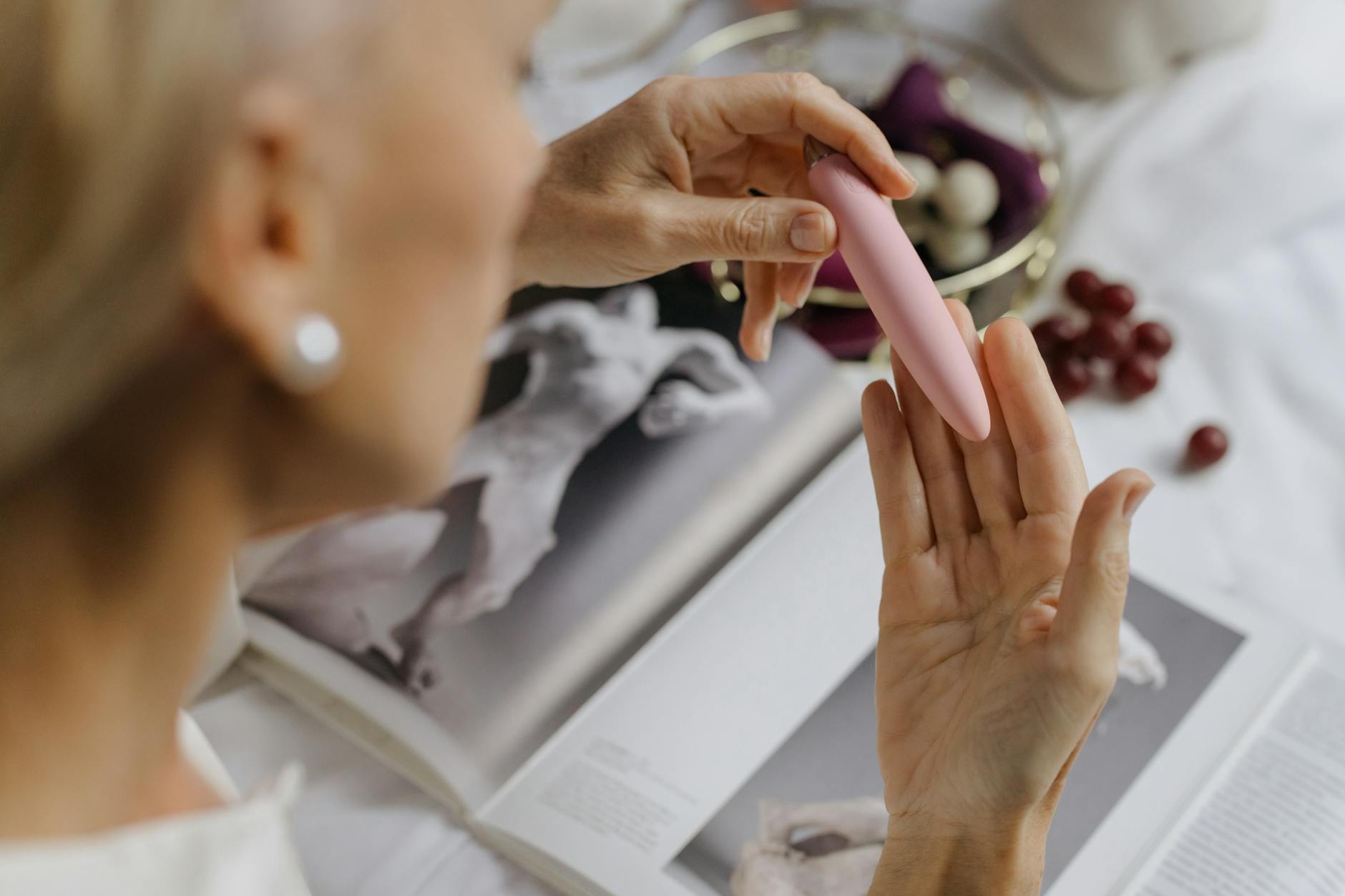
Here's what most couples get wrong about vibrator intensity
There's this belief that turning a clitoral vibrator up to maximum somehow proves something. Maximum speed equals maximum pleasure, which equals maximum satisfaction, right? Not quite. In fact, couples who blast intensity from the start often find themselves in a race they didn't sign up for, where one person is already over the finish line while the other is just warming up.
The sweet spot isn't the loudest rumble. It's the pace that lets you both build arousal together.
Why lower settings often work better for couples
When you're using a lemon vibrator with a partner, lower intensity settings (patterns 1 through 3 on most clitoral vibrators) do something counterintuitive. They slow everything down enough that you can actually stay in sync.
Here's the physiology: arousal takes time to build, and it's not linear. There are waves of sensation, plateau phases, and moments where the body needs to integrate before climbing higher. When you start on setting 2 or 3 instead of cranking to 7 or 8, you give both of you room to rise together. The person with the vibrator gets sustained, building sensation. Their partner can keep pace mentally and physically without feeling rushed.
I've worked with hundreds of couples, and the ones who report longer, more satisfying intimate time almost always start lower than they think they need to. They often say things like, "We thought we were wasting time, but actually that slower beginning changed everything."
The three-phase intensity strategy
Think of your time together in three acts. This framework works whether you're using a lemon vibrator solo or with a partner.
Phase 1 (exploration): Patterns 1-3, 5-10 minutes. This is your warm-up. You're touching, kissing, building anticipation. If using a Lem or similar clitoral vibrator, keep it on a lower pattern. The goal here isn't intensity; it's presence. You're both getting curious about sensation, checking in, noticing what feels good.
Phase 2 (building): Patterns 3-5, 10-20 minutes. Now you can increase. This middle section is where arousal deepens. If you're using the vibrator during partnered sex or partnered touch, this is when the intensity can climb gradually. You're reading your partner's body, adjusting based on breathing and movement. A pattern that's too intense here will peak too fast; a pattern that's too mild will feel stuck.
Phase 3 (crescendo): Patterns 5-8, variable. Only now is higher intensity appropriate, and even then, it depends on who's holding the vibrator and what kind of stimulation feels best. Some people want maximum intensity for 30 seconds at the very end. Others prefer a medium-high setting sustained over longer time. The key is that you both have context for why the intensity is rising. It's not arbitrary; it's responsive.
Pattern selection matters more than you think
Most clitoral vibrators, including the Lem, offer multiple patterns alongside intensity levels. Couples often fixate on intensity and ignore patterns entirely. That's a missed opportunity.
Different patterns create different rhythms. A steady buzz at pattern 1 feels completely different from a pulsing pattern at the same intensity. Some patterns mimic a tapping sensation; others are wave-like or rhythmic. If one partner finds steady vibration overwhelming, a pulsing pattern at slightly higher intensity might feel more manageable. If the other craves consistency, a steady pattern at lower intensity might be perfect.
The best couples approach: try different patterns at the same intensity setting before you turn up the dial. You might find that pattern 4 on pulse feels right for both of you, while pattern 7 on steady is too much for one person and not quite enough for the other. Spending 10 minutes exploring patterns is time well spent.
What to do if one of you is ready to finish and the other isn't
This is the actual problem most couples face. One person's body is responding quickly (totally normal), and the other needs more time (also totally normal). This is where intensity and pattern selection becomes genuinely useful.
If the person with the vibrator is close to orgasm and their partner isn't, lower the intensity slightly. Seriously. The urge is to push higher to finish faster, but that actually narrows sensation. Lowering to a medium setting and switching to a gentler pattern can extend the experience for both. It sounds counterintuitive, but easing off the gas actually lets arousal stay in the body longer.
If the person with the vibrator isn't there yet and their partner is rushing them, give yourself permission to take it slower. Use a lower pattern, focus on the sensations you're actually having instead of chasing an outcome. Communication helps too: "I'm going to stay here a bit longer, and that's okay." Partners who can hear that without feeling rejected tend to have longer, more connected intimate time.
The role of communication during intensity changes
You can't successfully navigate intensity together without talking about it. Not clinical talk. Just simple, in-the-moment feedback.
"A bit less," or "that pattern feels better," or "keep going, you're there," or "let's slow down for a second." These aren't mood killers. They're actually what deepens connection. When you know your partner is adjusting based on your actual experience, not guessing, there's a real sense of being seen.
I recommend checking in without stopping: "How's this feeling?" can be asked mid-experience, and the answer can be a sound, a nod, or actual words. Partners who develop a shared language around intensity and patterns report feeling less self-conscious and more able to stay present.
Why the Lem's pattern variety actually helps couples last longer
Lemon clitoral vibrators like the Lem offer multiple intensity levels and patterns specifically because bodies and preferences vary wildly. A lemon sucker-style vibrator's gentler suction mechanism means you can go higher on intensity without the uncomfortable friction of traditional vibrators. This actually gives couples more room to play with settings without hitting a ceiling where sensation becomes painful or too intense.
What this means practically: you might find that pattern 6 on the Lem feels comparable to pattern 3 on a traditional vibrator. That extra flexibility means couples can extend the experience without compromise.
The pressure problem you haven't considered
Here's something that doesn't get discussed: sometimes the person holding the vibrator feels pressure to "deliver" an orgasm quickly. They crank the intensity, their partner senses the urgency, and suddenly the whole experience becomes goal-focused instead of pleasure-focused. Neither of you enjoys it as much.
Lowering intensity removes that performance pressure. When you start at pattern 2 or 3, there's no rush. You're building something deliberately. Your partner feels the difference. The experience lengthens not because you're trying harder, but because you've removed the desperation that actually speeds everything up.
When to increase intensity and when to hold steady
Increasing intensity works best when both of you are already in arousal. Jumping from 0 to 7 before you've kissed, touched, or connected tends to create a jarring sensation. Increase intensity when you notice breathing changing, when your partner is meeting your touch, when the body is already responding.
Hold steady when you've found something that works. Couples often make the mistake of constantly tweaking settings, chasing the next level. Sometimes the right setting is 4, and it stays 4 for 15 minutes because that's the pace that feels best. Trust that.
Increase intensity near the end if intensity increase is wanted. Not everyone wants to climax at maximum. Some people prefer to stay at medium-high because it feels better to them. Ask before you assume.
What research actually says about timing and pleasure
Studies on partnered intimate experiences consistently show that couples who report longer, more satisfying sessions share a few traits: they communicate, they prioritize comfort over performance, they warm up adequately, and they're willing to slow down when needed. Intensity isn't the variable that predicts satisfaction. Synchrony is. Presence is. The ability to adjust together is.
When you use a clitoral vibrator with intention around intensity and pattern, you're actually creating space for these things to happen.
A quick troubleshooting guide
If intensity feels chaotic: you're probably increasing too fast. Go back to patterns 1-3 and stay there longer.
If everything feels too intense at lower settings: try different patterns before assuming you need lower intensity.
If you're not lasting as long as you'd like: check whether you're building adequately in phase 1. Five-minute warm-ups often aren't enough. Fifteen is better.
If one of you always climaxes first: explore different intensities and patterns, yes, but also consider whether that person is rushing because of anxiety. Sometimes the "problem" isn't the vibrator; it's the pressure. Lower intensity often fixes that.
If vibration intensity is uncomfortable: you might benefit from a different style of stimulation, or different toy entirely. That's fine. A lemon vibrator works beautifully for many couples, but not all. Lemon vibrators compare differently across bodies, and what works is highly individual.
The bottom line
Lasting longer together isn't about finding the perfect intensity. It's about building arousal intentionally, adjusting based on what you're both actually experiencing, and removing the pressure that makes everything feel rushed. Starting lower, exploring patterns, and communicating makes this possible. Your best settings aren't what feel strongest; they're what let you both stay present.
People also ask
What intensity setting is best for first-time vibrator use with a partner?
Start at pattern 1 or 2, which are gentler and easier to adapt to. Many people assume they need intensity right away, but your body is more responsive when you've already warmed up. Spend time on lower settings before increasing. You can always go higher, but starting too intense can desensitize the area and make lower settings feel boring. Give yourself at least 5-10 minutes at lower intensity before you consider turning it up.
Can using a vibrator make it harder to orgasm without one?
Not inherently. Your body doesn't "forget" how to respond to different types of touch. What can happen is habituation: if you only ever use maximum intensity, lower-intensity stimulation might feel less effective. This is why exploring patterns and mid-range intensities is useful. You're training your body to respond to variety, which actually makes it easier to feel pleasure in different contexts, not harder.
How do I know if my partner is uncomfortable with vibrator intensity?
Listen to their breathing, watch their body, and ask directly. "Does this feel good?" "Want me to turn it down?" "Should we try a different pattern?" These aren't awkward; they're how couples stay connected. If your partner seems tense, pulled away, or is holding their breath, intensity is probably too high. Lower it without making a big deal out of it.
Is there a "wrong" intensity level?
Not universally. What's too intense for one person is perfect for another. What matters is that it feels good for the person experiencing it. The only "wrong" intensity is one that causes pain or discomfort. If something hurts, stop and try lower. Clitoral stimulation that feels too intense is actually pretty common, and it's solvable by shifting patterns or intensity.
How often should I change patterns during intimate time?
As often as feels good, or not at all. Some people love variety; others prefer finding one pattern that works and staying with it. There's no rule. Some couples discover one pattern early on and use it for months. Others experiment every time. Both are fine. Follow sensation, not a checklist.
Can intensity settings help with intimacy if arousal takes longer to build?
Absolutely. If either partner needs longer to warm up, lower intensities and extended time in phase 1 help tremendously. Taking more time for arousal and foreplay actually deepens sensation. You're not fighting against the body's pace; you're honoring it. Lower intensity sustained over longer periods often produces more satisfying results than high intensity rushed through.